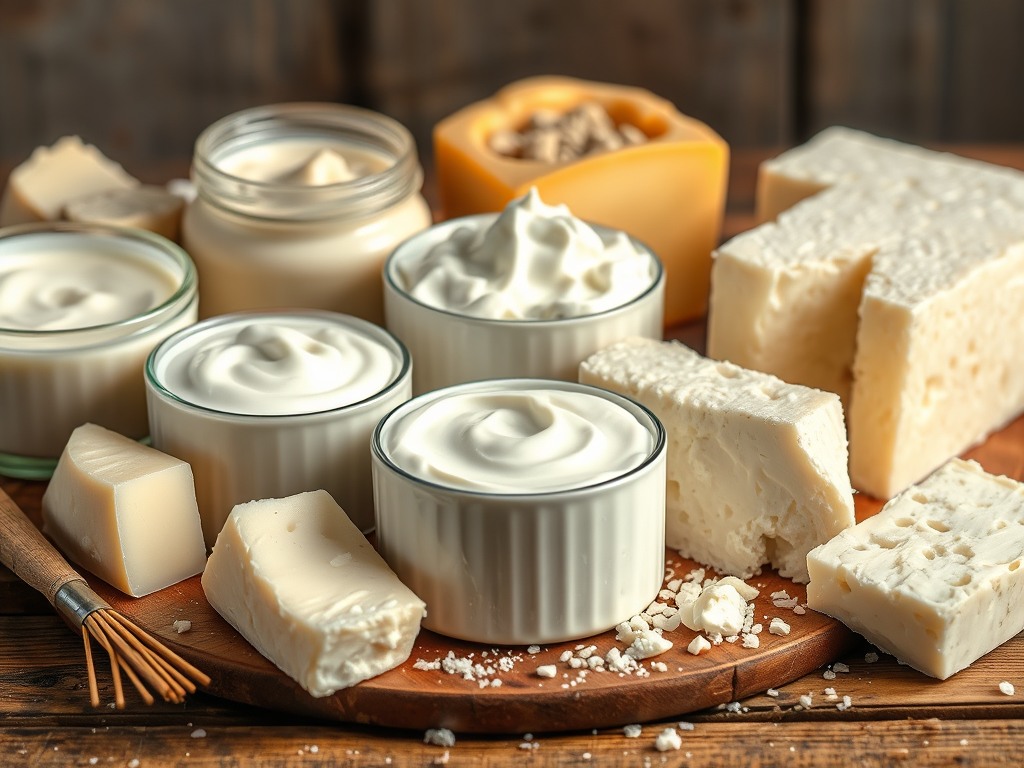
Milk is deceptively simple. Give it bacteria, acid, or enzymes — and a bit of time — and it turns into curd, yoghurt, hung curd, paneer, or cheese.
This is a friendly guide to what each one is, how they differ, and how you can start experimenting at home using rennet and Streptococcus thermophilus starter cultures.
🥣 Curd (Dahi): India’s Everyday Fermented Milk
Curd is what most Indian homes grew up with.
- How it’s made: Warm milk + a spoon of previous day’s curd.
- What happens: Natural lactic acid bacteria convert lactose → lactic acid → milk thickens and sets.
- Taste & texture: Lightly sour, soft, wobbly.
- Health angle: Naturally probiotic (good for the gut), but the exact strains vary from kitchen to kitchen.
Think of curd as the rustic, intuitive way of fermenting milk.
🇬🇷 Yoghurt: The Polished, Controlled Cousin
Yoghurt uses defined starter cultures, mainly:
- Streptococcus thermophilus
- Lactobacillus delbrueckii subsp. bulgaricus
These give a consistent set and taste.
- How it’s made: Milk is heated, cooled to ~40–45°C, inoculated with starter, and left to ferment.
- Texture: Smoother and creamier than typical homemade curd.
- Health: Reliable, high-count probiotic food.
👉 Practical tip:
If you’re just starting with cultures, yoghurt is your best first project. A small sachet of starter with S. thermophilus will give you reliable yoghurt even in winter.
🥛 Hung Curd: Thickened, Protein-Rich Goodness
Hung curd is simply curd that has lost its extra water (whey).
- How it’s made:
Line a sieve with clean muslin, pour in curd, tie and hang over a bowl or place in the fridge. Let the whey drip for 4–6 hours. - Texture: Thick, creamy, spreadable.
- Uses:
- Shrikhand
- Tikka marinades
- Sandwich spreads
- Dahi kebabs and dips
Because whey is removed, protein per spoon goes up and water goes down — a kind of Indian “Greek yoghurt.”
👉 Practical tip:
If you want a smooth, cream-cheese-like spread, whisk the hung curd well after straining. Add just a pinch of salt and a drizzle of olive oil.
🧊 Cottage Cheese (Paneer): Acid-Coagulated Fresh Cheese
Paneer skips fermentation entirely.
- How it’s made:
- Bring milk just to a boil.
- Add lemon juice or vinegar slowly, stirring.
- Milk splits into curds (solids) and whey (liquid).
- Strain the curds and press them under weight → paneer block.
- Texture: Firm but soft enough to cut.
- Taste: Mild, milky, neutral.
- Health: Good protein source, not probiotic (because no fermentation).
👉 Practical tip:
If your paneer turns rubbery, you probably heated the milk too much after adding acid, or pressed it too hard/too long. Stop heating as soon as curdling is complete.
🧀 Cheese: When Milk Meets Rennet and Time
Cheese is curd taken to the level of art.
Most traditional cheeses use:
- Starter cultures (often including S. thermophilus or other thermophilic bacteria)
- Rennet (animal or microbial enzyme) to coagulate milk
- Salting, pressing, and aging
This can produce:
- Soft, stretchy cheeses (like mozzarella)
- Semi-hard cheeses (like gouda)
- Hard, aged cheeses (like cheddar or parmesan)
👉 Microbial rennet is commonly available now — ideal if you prefer a vegetarian source and want to experiment with fresh cheeses at home.
🧪 Rennet and S. thermophilus: What You Can Actually Buy
If you want to move beyond basic curd:
- Rennet (usually microbial/vegetarian):
- Used in tiny amounts to set milk into a uniform gel.
- Makes a finer, cleaner curd than lemon/vinegar.
- Good for fresh cheeses, mozzarella-type experiments, etc.
- Streptococcus thermophilus yoghurt / cheese cultures:
- Sold as yoghurt starters or thermophilic cheese starter cultures.
- Give you thick, balanced yoghurt consistently.
- Often combined with other beneficial bacteria.
You don’t have to become a cheesemaker overnight — even just switching from “old curd as starter” to a proper yoghurt culture is a big quality jump.
🧑🍳 Practical Tips Before You Start Experimenting
1️⃣ Start With Yoghurt Cultures First
Instead of jumping straight into complex cheeses, begin with:
- Plain yoghurt using a proper culture
- Then try Greek-style by straining it (like hung curd)
Benefits:
- Better texture
- Less sourness control issues
- Reliable set even in winter
Temperature thumb rule:
- Heat milk till just below boiling, then cool to 40–45°C before adding culture.
- If you can comfortably dip a clean finger for 10 seconds, you’re roughly there.
2️⃣ Don’t Rush Into Long-Aged Cheeses
Cheddar, gouda, parmesan need:
- Controlled fridge or cave-like conditions
- Time measured in weeks or months
- Very strict hygiene
Instead, start with:
- Fresh paneer using acid
- Fresh cheese using rennet
- Feta-style cheese that sits in brine for a short time
That way, you understand coagulation and curd handling before worrying about aging.
3️⃣ Be Precise With Rennet
Rennet is powerful.
- Too much → rubbery, tough cheese
- Too little → weak curd, falls apart
Use:
- A dropper or syringe
- Note: often a few drops per litre is enough (depending on brand)
Always dissolve rennet in a little cool, non-chlorinated water before adding to warm milk.
4️⃣ Straining Curd Unlocks Many Recipes
Hung curd is your bridge between everyday dahi and cream cheese.
Use it to make:
- Herb-garlic sandwich spreads
- Honey–saffron shrikhand
- Thick dips (hung curd + roasted garlic + cumin + salt)
- Tenderizing marinades for paneer / chicken / vegetables
Once you understand straining and whey removal, a lot of “gourmet” recipes start looking very doable.
📊 Quick Comparison Table
| Product | Fermented? | Coagulant | Texture | Probiotics? | Typical Use |
|---|---|---|---|---|---|
| Curd | ✔ | Natural starter | Soft, wobbly | ✔ | Daily eating |
| Yoghurt | ✔ | Defined cultures (S. thermophilus etc.) | Smooth, creamy | ✔✔ | Bowls, smoothies, parfaits |
| Hung Curd | ✔ | As above | Thick, spreadable | ✔ | Dips, shrikhand, marinades |
| Paneer | ❌ | Acid (lemon/vinegar) | Firm, sliceable | ❌ | Curries, tikkas |
| Cheese | Often ✔ | Rennet + cultures | Soft to hard | Varies | Pizza, sandwiches, platters |
🧩 How to Choose What to Try First
- If you want better digestion & gut health → Start with yoghurt culture, then hung curd.
- If you want cooking versatility → Learn perfect paneer (acid), then try a simple fresh cheese with rennet.
- If you love experiments and patience → Move gradually towards aged cheeses once you’re comfortable with hygiene and temperatures.
The same litre of milk can be five different experiences — that’s the real magic.