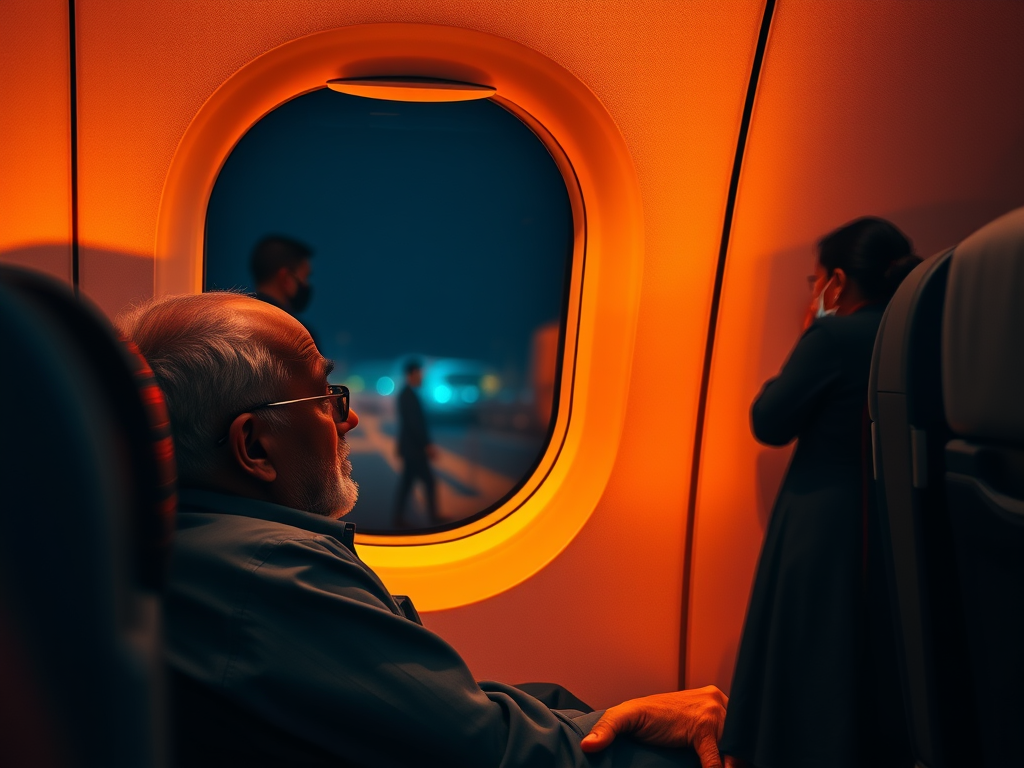
An Absurd Memory at 35,000 Feet
I do not know why this memory survived.
Entire years have gone missing—faces, places, certainties—but this one remained folded inside a page, like a receipt for something I never remember buying. A night Indigo flight to Pune. A window seat. A vacant middle seat, as if the aircraft itself had planned an intermission.
An old man sat on the aisle. He leaned forward at some point and introduced himself, the way people once did before the age of profiles and warnings. He said he was a farmer from near Akola. This detail has stayed with me, though I have forgotten the names of doctors who once saved my life. Maharashtra, he said, and I felt inexplicably at ease, as if geography itself had extended a hand.
Indigo, for the uninitiated, is an airline that gives you nothing except altitude. Water is free, but only just. Everything else is for sale. The aircraft is less a vehicle than a moving shop, and the merchandise includes hunger, time, and the fragile hope that a snack might improve one’s mood.
The real inventory, however, is the cabin crew.
They move up and down the aisle like a carefully rehearsed idea of elegance. Their smiles appear unaffected by gravity, economics, or repeated human requests. Watching the passengers watch them becomes the primary in-flight entertainment. People request seatbelt adjustments with ceremonial seriousness. Chairs are reclined, uprighted, reclined again. Money is eventually exchanged—not always for food, but for the reassurance that one has participated in the ritual.
The old man watches all this without participating. His daughter sits across the aisle, a silent deterrent to curiosity. He does not speak to the crew. He does not look too long. This restraint, I later realize, is the most articulate thing about him.
After some time—time behaves strangely at night, in pressurized cabins—he asks me what such girls are paid. He guesses fifteen thousand rupees, the way one guesses the price of something never meant to be bought.
I tell him sixty thousand. I add, without being asked, that they are still underpaid.
I explain the labour of the smile. The training. The uniform. The hair. The obligation to remain pleasant while being appraised by strangers who are technically seated but morally standing too close. I speak with the confidence of someone who has never done the job.
He listens. Then he says wives lose their smile in four years, without doing even half of this.
At this point, my arithmetic begins.
I calculate the earnings of the aircraft. Daily revenue. Monthly revenue. Salaries. Fuel. Maintenance. I try to locate injustice using numbers, as if exploitation might reveal itself if cornered properly. I say words like “training period” and “profit margins.” I nod seriously at my own arguments.
He says nothing except “at least,” when I suggest a year of training.
The plane continues toward Pune. The crew continues smiling. Money continues changing hands. My calculations trail off, unsatisfied. The old man sits back. His daughter does not look at him.
Years later, I find the page.
I do not remember writing it. I do not remember arriving in Pune. I do not know what happened to the farmer from Akola. I do not know if the airline ever balanced its books.
All I know is this:
for two hours, at 35,000 feet, nothing was resolved.
And somehow, that was enough to be remembered.