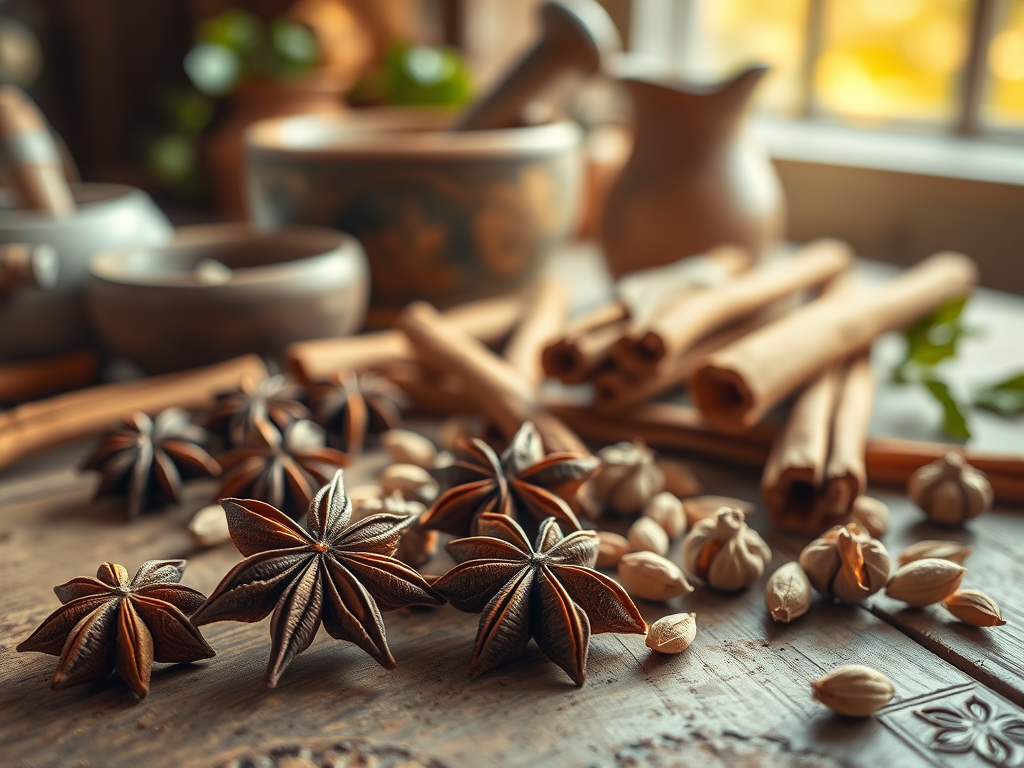
🌟 Kitchen Chemistry #3: Star Anise, Cinnamon & Cardamom
The aromatic trio that turns ordinary dishes into aromatic memories.
1️⃣ Star Anise – The Licorice Architect
Botanical name: Illicium verum
- Anethole – the dominant molecule; gives a sweet, licorice-like aroma (also found in fennel and anise).
- Linalool – adds floral stability.
- Shikimic acid – a unique compound; basis for antiviral synthesis.
Flavour profile: sweet, warm, perfumed — the backbone of biryani and Chinese five-spice.
Heat effect: Long simmering releases its full perfume; frying can make it bitter.
2️⃣ Cinnamon – The Sweet-Warm Storyteller
Botanical names: Cinnamomum verum (true cinnamon), C. cassia (stronger cassia bark)
- Cinnamaldehyde – the signature warm-sweet aroma.
- Eugenol – clove-like warmth and depth.
- Coumarin – especially in cassia; gives a rich, vanilla-toned perfume.
Flavour profile: sweet, woody, warm — perfect for meat stews, pulao, desserts.
Heat effect: Frying in oil opens up deep, smoky notes; slow simmering extracts sweetness.
3️⃣ Cardamom – The Green Queen
Botanical name: Elettaria cardamomum
- 1,8-Cineole – camphor-like, cooling freshness.
- Linalool – floral brightness.
- Acetate esters – sweet, fruity top notes.
Flavour profile: sweet, floral, minty; instantly lifts pulao, kheer, masala chai.
Heat effect: If fried too long, aroma evaporates; best added early for body or late for perfume.
Why This Trio Works Together
- Star anise gives depth and sweetness.
- Cinnamon gives warmth and woody roundness.
- Cardamom gives top-note brightness and lift.
Together they create a three-layer aromatic chord: base, body and high notes — the foundation of biryani, garam masala, Kashmiri kahwa, and festive sweets.
Quick Tip
Do this: Warm these spices in a dry pan for 30 seconds. The volatile oils bloom instantly and your kitchen smells like celebration.
Don’t do this: Overfry star anise or cardamom; their delicate molecules burn fast and turn bitter.