Everyday Bonds
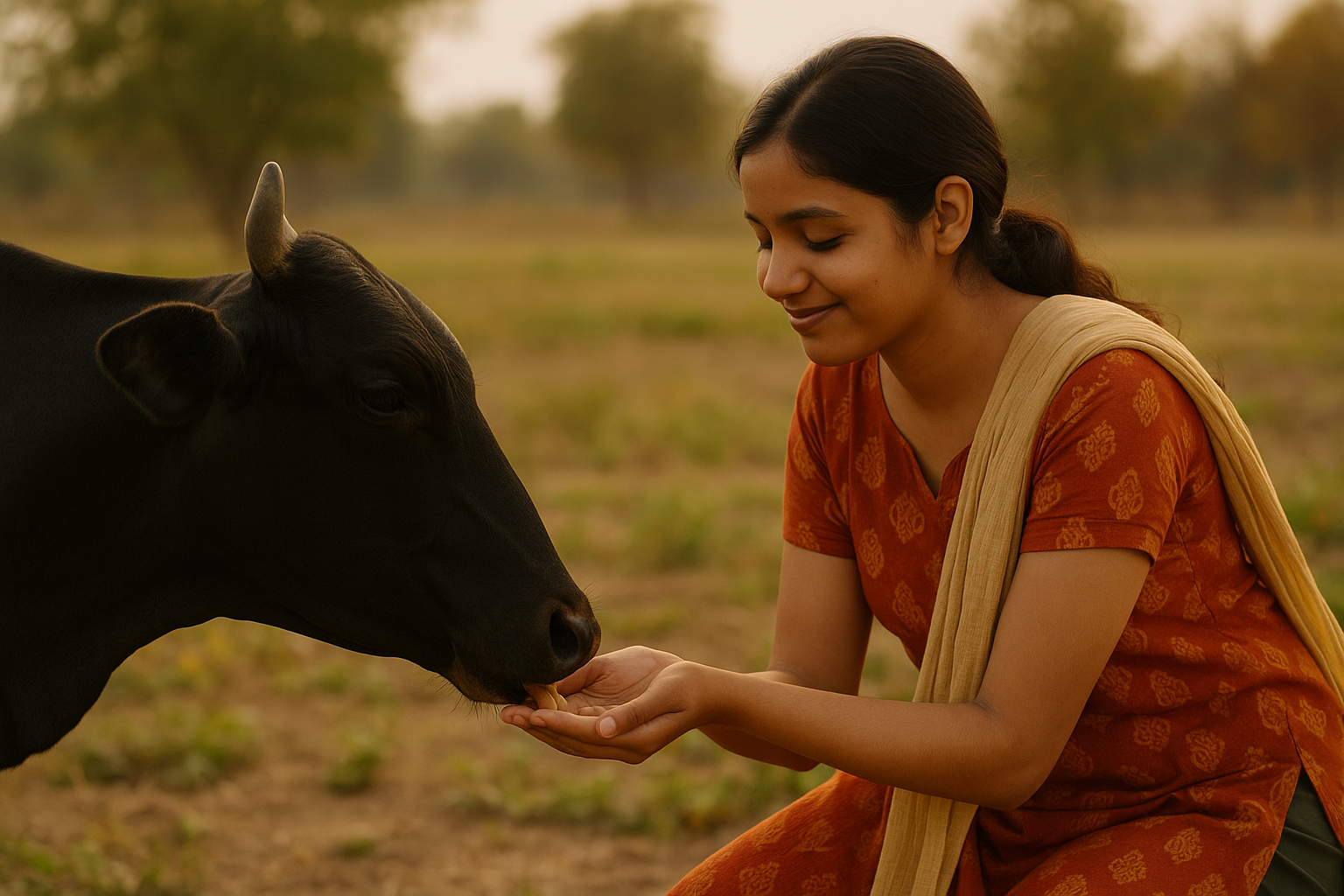
I saw a girl hurrying home because her cow would not eat, but from her hand. Just look at the intimacy, can it be surpassed. When her cow passed, she too had a sudden death, while dancing. More compassion, Her son had died of pneumonia, she still had the Cow.
I met a girl with two Cows and four strays. She brought a leopard cub home from the jungle. She released it deep into the jungle when she heard the meow
Countless people become home-bound for their pets.
Or their sick loved ones.
Countless are those who only live for themselves.
Occasional Faradays
Bopa Rai began life in a farming family, later stepping into a modest government-funded school in Delhi. Success then meant becoming a doctor or engineer. Over time, privilege and disadvantage tangled in unexpected ways — yet mobility, though difficult, was still possible. But is that still true today, across countries and cultures?
In the West, early universities laid the groundwork for the Renaissance and the Industrial Revolution. The rhetoric of meritocracy still exists. Yet, systemic privilege quietly shapes outcomes. Elite universities favor those with networks and resources. Schools in wealthier neighborhoods nurture advantage from the start. In China, political loyalty is the actual ladder of advancement.
In Pakistan, military and entrenched elites hold sway.
In Afghanistan, decades of conflict have made upward mobility almost impossible. And so the question remains: is there still space for the Riemann, the lone genius from nowhere? Yes — but the climb is steeper, the air thinner.
Skill brings wealth: surgeons, coders, chefs. But curiosity sparks breakthroughs — the occasional Faraday’s, the self-taught minds who refuse to stop asking questions. The future belongs to a blend of the two, broad education that feeds adaptability and specialized training that grounds excellence.
The Measure of the Sukta
येषां न विद्या न तपो न दानं,
ज्ञानं न शीलं न गुणो न धर्मः ।
ते मर्त्यलोके भुविभारभूता,
मनुष्यरूपेण मृगाश्चरन्ति ॥
Yeṣāṁ na vidyā na tapo na dānaṁ, jñānaṁ na śīlaṁ na guṇo na dharmaḥ. Te martyaloke bhuvibhārabhūtā, manuṣyarūpeṇa mṛgāś charanti.
“Those who possess neither learning, nor austerity, nor charity, nor knowledge, nor good conduct, nor virtue, nor righteousness are a burden on the earth. They wander in human form, but they are truly like beasts.”
Nietzsche’s Shadow
The person who has all the qualities of this Sukta, Nietzsche’s imagination, would have made him a supervillain. Instead, think, do you have one quality that makes you human in the Sukta? Aren’t you intelligent enough? Have you not built a home but been dependent on ancestral property and so on? You are reaching supermanhood, according to Sukta. No need to be a superhuman being a human is hard enough.
The Human Enough
Probably you have heard the story of the millionaire dog. It still chased its tail. He had a majordomo, a housekeeper, and a cook. Yet, he still chased its tail. He passed at the grand old age of fourteen. The law company digested the rest.
The ant and grasshopper fable isn’t species-bound; it’s about behavior — diligence vs. indulgence. Humans can embody either.
Brilliance sometimes breaks through the crust of privilege. Michael Faraday, with no pedigree, redefined science through sheer curiosity and discipline. His story is a reminder that potential is never entirely suppressed.
The real challenge today is designing systems that don’t merely preserve privilege but allow such brilliance to shine. Until then, wisdom lies in two directions:
- High: live with purpose, generosity, knowledge.
- Near: honor the trust of a cow eating from your hand.
That’s the story within the story. The grandeur of ideas and the tenderness of small moments are both necessary. Together, they make life more than grazing.
“To be human is already enough.”
Comments
One response to “To Be Human is Hard Enough”
[…] To Be Human is Hard Enough […]