Key Takeaways
- The article narrates the complex medical case of Monsieur M, who exhibits symptoms of Cushing’s Syndrome in Clinical Medicine.
- Lt Col Dr. GD Sharma and Sister Renu play pivotal roles in diagnosing M’s mysterious ailment through keen observation and empathy.
- Cushing’s Syndrome is characterized by obesity, hypertension, diabetes, and distinctive physical changes, as identified by Col S. Anand.
- The story emphasizes the interconnectedness of lives in a hospital setting, showcasing how healing transcends mere physical treatment.
- Ultimately, the article conveys a powerful message about the importance of observation and empathy in the medical field and life.
Estimated reading time: 7 minutes

—
by
in Chronicles of Bopa Rai, Ethnography and Social, Feminine Power, Health and Clinical Medicine, Pao Of Physics, Philosophy, Uncategorized
The Curious Case of Monsieur M, Sister Renu, and the Darcys of Pathankot
Originally published on July 1, 2025, by Narinder in Chronicles of Bopa Rai, Ethnography and Social, Feminine Power, Health and Clinical Medicine, Pao Of Physics, Philosophy, Uncategorized
Imagine a military hospital in Pathankot, buzzing with urgency and hidden stories—a place where lives collide in unexpected ways. This is the stage for a riveting tale of medical intrigue, raw human resilience, and serendipitous twists that prove life is far more connected than we dare to believe. Dive in, and discover how one man’s mysterious ailment unraveled secrets, forged unlikely bonds, and revealed the transformative power of empathy and observation.
The hospital thrummed with the relentless rhythm of healing and heartache. Patients streamed in from distant corners, but Monsieur M Morose arrived like a storm cloud—intense, enigmatic, and utterly baffling. He couldn’t pinpoint his woes; instead, he unleashed a flood of vague, frantic grievances. “Doctor, it’s everywhere… weakness, heaviness, something’s wrong!” he’d ramble, his eyes wide with unspoken terror.
Enter Lt Col Dr. GD Sharma, a beacon of compassion armed with a sharp, listening mind. As M poured out his soul, Sharma jotted down: “Anxious, Obese, Diabetic, Hypertension, weakness obsessive.” This man was a whirlwind of self-absorption, a riddle wrapped in endless chatter. Admitting him felt like inviting a sphinx into the ward. Our young intern, Lieutenant Bopa Rai, shadowed Sharma, whispering in awe, “There’s something deeper here, isn’t there? What could it be?”
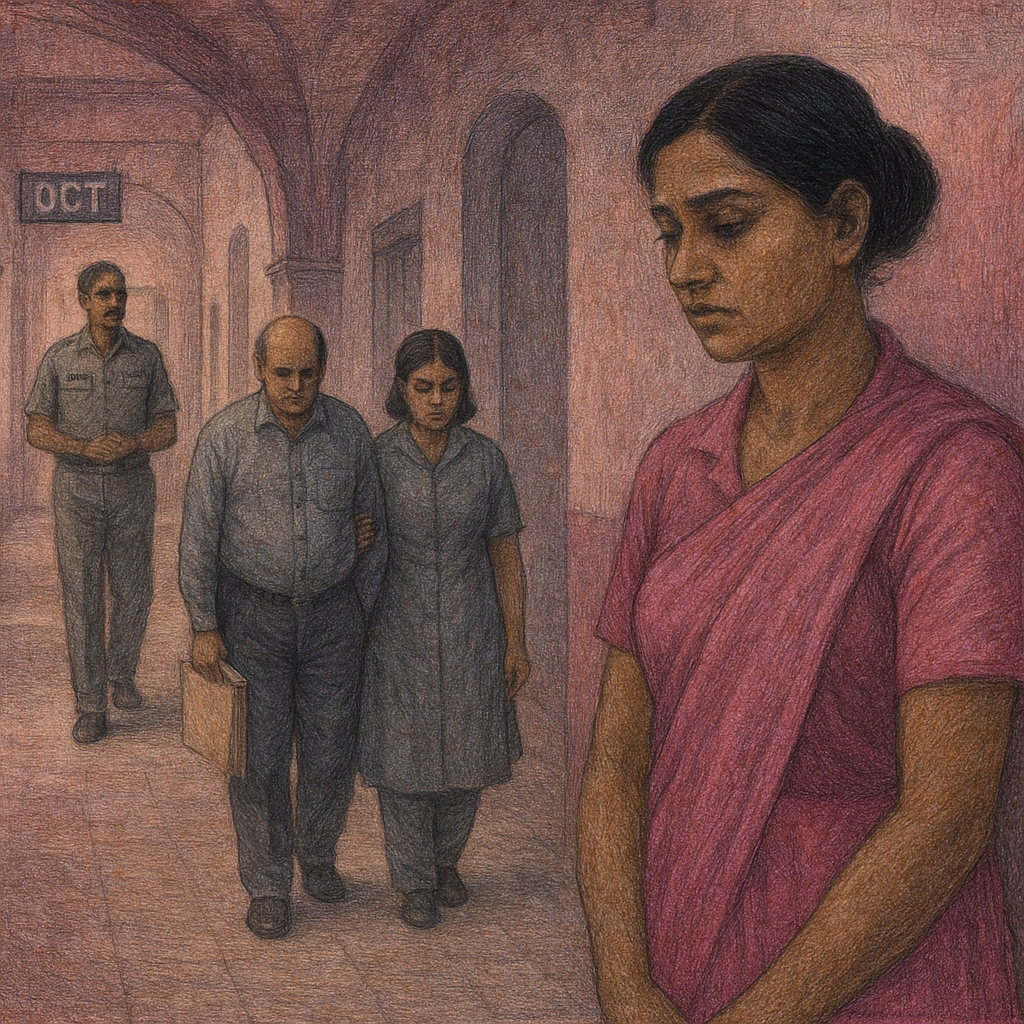
Amid the chaos, Sister Renu, a gentle staff nurse with a heart as vast as the ocean, became M’s quiet anchor. Her soft voice cut through his anxiety like a lifeline. “It’s okay, sir. We’re here for you,” she’d say, her nods offering solace in his turbulent sea. But Renu carried her own storms: an eight-year-old son at home, a husband lost to alcohol’s grip, and weekly visits to a psychiatrist for her hidden battles. Her uniform, often in a “neurotic pink,” mirrored her inner turmoil—a vibrant yet anxious hue that spoke of unyielding empathy. “He’s in real pain, Doctor,” she’d confide to Sharma, her words laced with a depth born from her own scars.
Down in the dimly lit pathology lab, technicians like the veteran Mr. Singh processed M’s samples with mechanical precision. To them, it was just data—tubes and numbers—oblivious to the drama unfolding above.
Fifteen grueling days passed with no progress. M’s obesity, diabetes, and hypertension stubbornly resisted treatment. His legs thinned alarmingly, his head felt like lead. The diagnosis danced just out of reach, sly and elusive. Sharma, undeterred, sought allies: first Psychiatry, where a senior doctor dismissed it as “neurotic depression,” fidgeting with his Rudraksha beads mid-interview.
Unsatisfied, Sharma turned to Dermatology. In Col S. Anand’s office, as M bared his body and Bopa Rai stumbled through the symptoms, magic happened. Anand’s eyes sharpened. “Look here,” he commanded, pointing to the “buffalo hump” swelling on M’s neck and shoulders, the rounded “moon facies,” and the purple striae streaking his abdomen. “This is Cushing’s Syndrome—a storm of excess steroids wreaking havoc on his body.” In mere minutes, Anand’s keen observation cracked the case wide open. He demonstrated with sit-ups, revealing the muscle weakness in M’s hamstrings. “See? This explains it all—obesity, hypertension, diabetes, myopathy. Never underestimate a thorough exam; strip away the layers, and the truth emerges.”
Bopa Rai’s jaw dropped. “Incredible! It’s all connected.” Anand nodded, emphasizing: “Primary issues are common, but add these signs, and it’s unmistakable. Observation saves lives.”
An MRI sealed the deal. Radiologist Dr. Priya Sharma scanned the images: “Bilateral adrenal hyperplasia—textbook Cushing’s.” Her report validated Anand’s genius, propelling M to Delhi’s top Army hospital for advanced care.
The Twists of Fate: Colors, Connections, and Second Chances

But this story isn’t just about medicine—it’s a persuasive reminder that healing extends beyond the body, weaving fates in profound, unpredictable ways. Picture life as a sine wave, rising and falling with lessons in every curve.
Sister Renu’s world shifted when her son, now college-bound in violet shirts that bruised to purple, explained “sine theta.” In that moment, clarity struck: her husband’s abusive rants masked a twisted love, now forever lost to suicide. Heartbroken, she grappled with her own “lunacy” after realizing her psychiatrist’s charm was mere professional ploy. Yet, from this abyss, she viewed M anew—his ramblings echoing her chaos, fueling deeper compassion.
Enter Mr. Darcy, a dark-complexioned scholar with an FRSC from Scotland, sweltering in a three-piece suit and cravat, his “forgotten lungi” a nod to cultural clashes. He chose “Darcy” to reclaim dignity from potential slurs, his dark attire deepening to black, symbolizing buried burdens.
Years later, destinies intertwined like quadratic equations yielding real roots. M, freed from his moroseness post-treatment, divorced his weary wife. Renu, resilient amid loss, found renewal.
In a twist straight from a novel, M wed Mrs. Darcy—a meek soul who despised “Darcy-like” pomp, creating delicious irony. They’d visit clinics in sullen greys, fading to monochrome, embracing shared melancholy as comfort.
Meanwhile, Renu married Mr. Darcy himself, now a patient in Delhi. Her “neurotic pink” softened to a bruised rose, her empathy anchoring his formality. Together, they navigated ailments, proving opposites attract and heal.
Pathankot’s hospital was a hotbed of desires: nurses eyeing interns, doctors charming nurses, officers flirting at hostels. Some equations solved beautifully; others dissolved into complexity. It’s a microcosm of life—where desires spark, and outcomes surprise.
Years on, Bopa Rai spots M in OPDs, files in hand, a quieter man accepting his path. Renu and her son thrive in their arcs. This tale persuades us: In medicine and life, keen observation and empathy unlock miracles. Lives entwine unpredictably, urging us to look deeper, connect bolder, and embrace the sine waves of existence.
Glossary for Key Medical Terms:
- Cushing’s Syndrome: A condition caused by prolonged exposure to high levels of cortisol (a steroid hormone), leading to symptoms like weight gain, high blood pressure, diabetes, muscle weakness, and distinctive physical changes such as a “buffalo hump” (fat deposit on the upper back), “moon facies” (rounded face), and striae (stretch marks).
- Adrenal Hyperplasia: Enlargement of the adrenal glands, often leading to overproduction of hormones like cortisol, a common cause of Cushing’s Syndrome.
- Myopathy: Muscle weakness or disease, here contributing to M’s “thinning legs” and fatigue.
This story isn’t fiction—it’s a call to action. Observe closely, empathize deeply, and watch how one diagnosis can rewrite destinies. Share it, reflect on it, and let it inspire your own connections.
Comments
One response to “What Bopa Rai the Intern Learnt About Life and Clinical Medicine”
[…] What Bopa Rai the Intern Learnt About Life and Clinical Medicine […]