
Bopa’s Kitchen Lab: The Physics of the Perfect Pan
Cooking isn’t magic. It is applied physics. The most important ingredient in any recipe isn’t salt, fat, or spice—it is Heat.
I have watched too many good folks ruin good food because they are afraid of their pans. They burn the butter, the eggs stick like glue to the stainless steel, or their mutton curry turns into a watery soup.
Today, we are going deeper than just “turn the dial to medium.” We are going to look at what actually happens where the food meets the metal.
1. The Stainless Steel Miracle: The Leidenfrost Effect
If you have ever tried to fry an egg or make a Dosa on a stainless steel pan and ended up scraping a stuck mess off the bottom, your pan wasn’t broken. Its temperature was just in the “danger zone.”
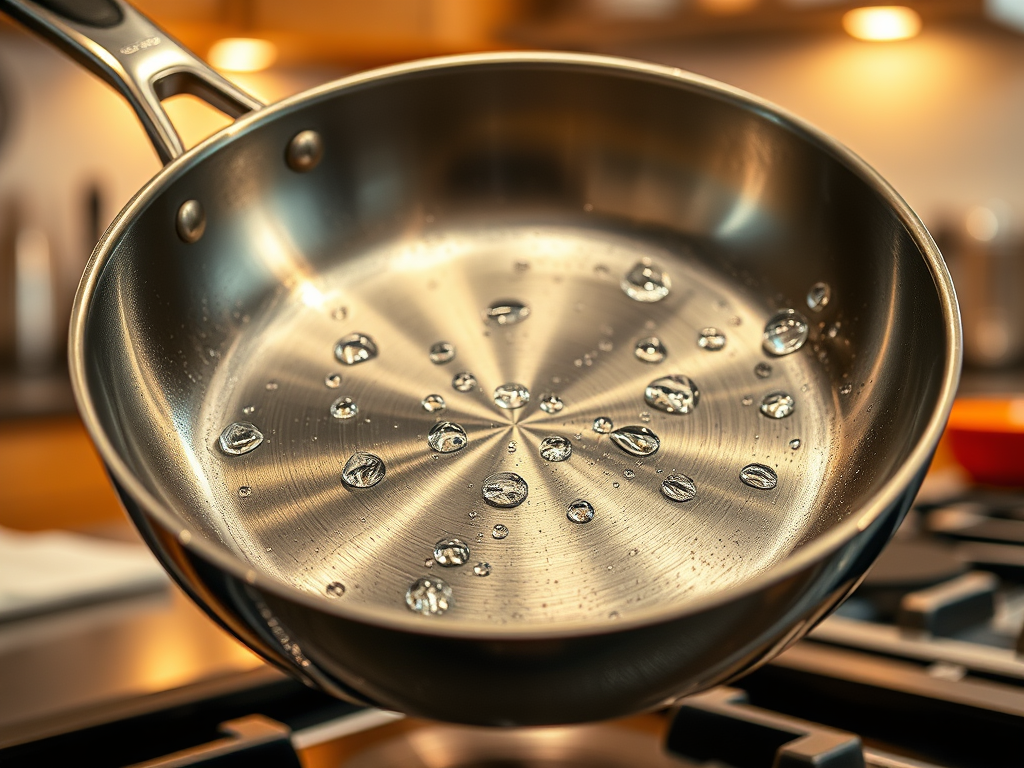
To make steel non-stick, you must harness the Leidenfrost Effect.
The Science
- Below 193°C (380°F): Water touches the metal, wets the surface, and evaporates. Food proteins bond to the metal pores. Result: Sticking.
- At 193°C (The Sweet Spot): The bottom of the water droplet vaporizes instantly upon contact. The rest of the droplet floats on this microscopic cushion of steam, like a puck on an air-hockey table. Result: Non-Stick.
The Protocol: The “Mercury Ball” Test
Before oil, before food, you must test the heat.
- Heat Dry: Place your dry stainless steel or iron pan on medium-high heat.
- The Test: Flick a few drops of water into the pan.
- Sizzle and sit? Too cold.
- Explode/Flash? Too hot.
- Scatter and Skitter? Perfect. If the drops dance across the pan like beads of mercury, you have reached 193°C.
- The Critical Step: Wipe out the water, reduce the flame slightly, and then add your oil.
2. WARNING: Know Your Material
⚠️ DO NOT use the Leidenfrost test on Ceramic or Non-Stick pans.
- Stainless Steel & Cast Iron: These love the heat. Heat them empty.
- Ceramic & Teflon: Heating these empty to 193°C causes “Thermal Shock.” The coating will expand rapidly and crack (craze), or the chemical binders will degrade, ruining the pan forever. Always put oil/food in these pans before turning on the heat.
3. The Butter Paradox (How not to burn Breakfast)
Here is the problem: The pan needs to be 193°C to be non-stick. But butter burns (smoke point) at 150°C. If you drop butter into a perfect pan, it will carbonize instantly.
The Solution: The “Oil Buffer” Technique
- Get the steel pan to the “Mercury Ball” temperature.
- Turn the flame down.
- Add Oil First: Pour in a teaspoon of high-heat oil (Avocado or Ghee). This coats the steel and acts as a thermal buffer.
- Add Butter Second: Count to ten, then drop the butter into the oil. The oil dilutes the butter and the temp drops slightly, preventing the milk solids from burning.
- Crack the Egg: Immediately.
Quick Reference: High Heat Oils
| Oil | Smoke Point | Best Use |
|---|---|---|
| Avocado Oil | 271°C / 520°F | The King. Searing steaks. |
| Ghee | 250°C / 482°F | Flavor Champion. Perfect for Dosa/Eggs. |
| Mustard Oil | 250°C / 480°F | Indian Curries (Smoke it first). |
| Peanut Oil | 232°C / 450°F | Deep Frying. |
| Butter | 150°C / 302°F | Flavor Only. Do not heat high. |
| Extra Virgin Olive Oil | 160°C / 320°F | Salad Only. Becomes bitter at high heat. |
4. The Physics of Searing: Meat and Latent Heat
When cooking heavy meats (steaks/chops), you are balancing Heat Flux (energy from the fire) against Latent Heat (energy absorbed by steam).
Why Meat Sticks (and why that’s good)
When you drop a steak, it will stick initially. The proteins bond to the metal. Do not panic.
The “Steam Shield” Mechanism:
- The heat shrinks the meat fibers.
- The fibers squeeze out moisture.
- The moisture hits the hot steel and flashes into steam (Latent Heat).
- This steam builds pressure and eventually pushes the meat up and off the metal.
Bopa’s Rule: If the meat is stuck, it is not ready to flip. Wait for the steam pressure to release it naturally.
5. The Tale of Two Pots: Clay vs. Slow Cooker
Why does an earthen pot make a better Mutton Curry than a glazed electric slow cooker? It comes down to Moisture Management.
-
The Glazed Slow Cooker (Hermetic): The pot is sealed. Moisture turns to steam, hits the lid, and drips back down. You end up with the same amount of water you started with. The result is a soup, not a gravy.
-
The Porous Earthen Pot (Transpiration): Unglazed clay breathes. It pulls moisture from the food through the capillary walls to the outside, where it evaporates.
- Evaporative Cooling: Keeps the pot at a steady, gentle simmer (approx 90-95°C).
- Reduction: Because water slowly leaves the pot, the gravy thickens naturally, intensifying the flavors of the spices and bone gelatin.
Final Thought: Use steel for the sear, clay for the slow cook, and physics for the flavor.
✂️ Sidebar: The Mercury Ball Test (Quick Guide)
Goal: Determine if your Stainless Steel pan is naturally non-stick (193°C).
Step 1: The Preheat Place your dry, empty stainless steel pan on the burner. Set heat to Medium-High. Wait 2-3 minutes.
Step 2: The Flick Dip your fingers in water and flick a few drops into the pan. Watch the reaction:
- Result A: The Sizzle (Too Cold)
- Visual: The water hisses, bubbles, and spreads out into a puddle.
- Action: Wait. The pan needs more heat.
- Result B: The Explosion (Too Hot)
- Visual: The water breaks into tiny mist particles instantly or evaporates in a flash.
- Action: Remove from heat for 30 seconds. You are burning the air.
- Result C: The Mercury Ball (Perfect)
- Visual: The water stays together in a round bead. It glides and dances across the surface without leaving a trail, looking like liquid mercury.
- Action: Proceed.
Step 3: The Adjustment (Crucial!)
- Wipe out the water beads with a paper towel.
- Turn the flame down to Medium or Low.
- Add your oil immediately.
- Add your food.