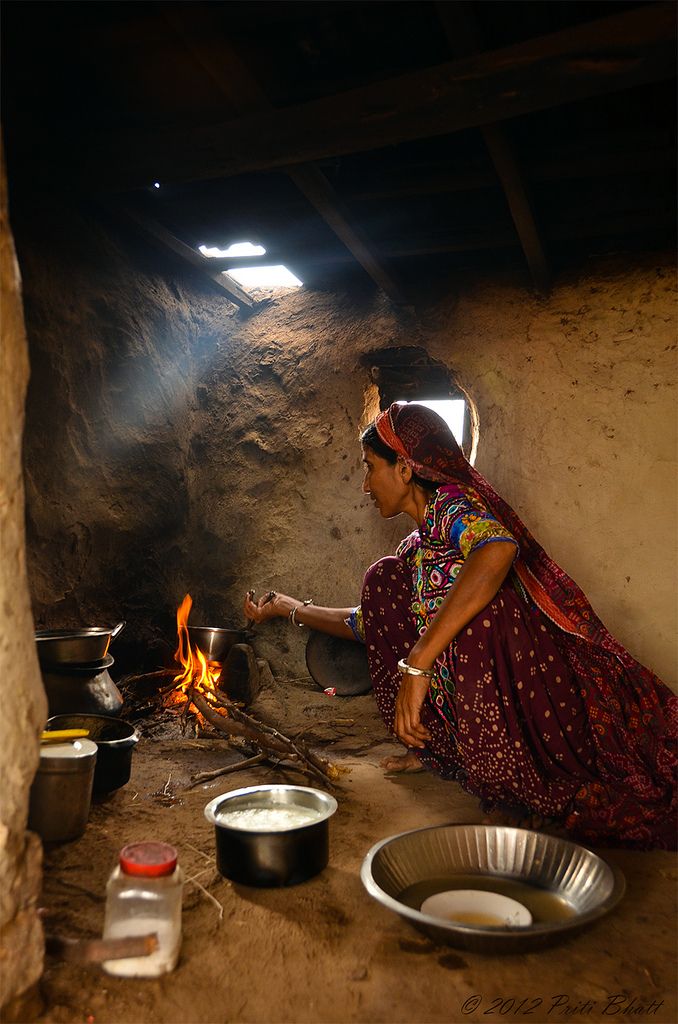
Fasting and purging are two time-honoured methods of healing in the ancient world, and their usefulness has not entirely vanished from modern medicine, though we have mostly forgotten how to speak of them without embarrassment. In old texts they appear beside prayer and pilgrimage; in modern journals they hide under words like caloric restriction, autophagy, and metabolic switching. But the body, unlike the mind, has never changed its grammar.
A tiny frail old woman was brought to the district hospital in Solan, already dead, for the simple formality of being declared so. She weighed no more than twenty kilograms. Her white hair was thin and wispy, her skin taut and dry, as though it had been gently stretched over a dwindling frame. Because her spine was curved into a soft bow and her knees permanently flexed, she could not lie flat. She had been brought on her side, in a kind of right-lateral repose, like a child sleeping. The spooning of her spine spoke of calcium leaving bone, that long, quiet softening that comes with age. The hollowness of her cheeks revealed the slow disappearance of fat. And yet her face was strangely peaceful. There was none of the clouded stare or slack horror that so often marks the recently dead. Her eyes were closed as though she had simply turned inward.
It was said she had died sometime during the night and had been discovered only the following afternoon. But her absence had been noticed. That, too, mattered. It meant she had been a presence in daily life until the very end. No one who came with her knew her name. That itself said something about how old she was: she belonged to a time before records, before formalities, before people became entries. Someone was sent back to the village to find out who she had been.
Dr Sharma, a kindly old physician who had seen more than his share of quiet deaths, asked the usual questions. When old people die at home, neglect must always be considered. Sometimes it is deliberate, more often it is not. Caregivers get busy. Attention thins. Meals are missed. The body yields. Slow starvation can do the work of poison. But in this case the enquiries brought a different story. The old woman had been able to take care of herself. She walked to the kitchen. She helped with small things. She gave sweets or rotis to her great-grandchildren. She smiled if someone spoke to her, though mostly she seemed content to inhabit a private, inward world. There was no sign of cruelty or abandonment.
Her name came back from the village: Kaushalya. Her age was guessed at ninety-five, though some of her relatives were disappointed; they had hoped for a hundred. Dr Sharma later wrote in his diary that only blessed people die in this fashion — without illness, without pain, with the mind still intact, owing nothing to anyone, desires long extinguished, content to watch one grey day slide into another without complaint or longing. Neither clinging to life nor summoning death. Simply being.
We like to say such people die of “old age,” but medicine cannot write that on a certificate. Old age is not a disease. There were no antecedent conditions to list. Her bent spine could be blamed on calcium deficiency. Her light weight could be blamed on the same. But none of that explained what had actually happened. The truth was quieter and stranger.
Kaushalya had not been failing.
She had been withdrawing.
For decades her body had been living on little. Whether by appetite or temperament or some instinct older than language, she had practiced what saints and ascetics have always practiced: mild, unending restraint. Thirty or forty percent fewer calories than the body might desire is enough to shift the entire internal economy. Growth signals quieten. Inflammation recedes. Cells begin to recycle their own damaged parts. And when cells grow old, distorted, or no longer useful, they do something remarkable — they commit apoptosis, a kind of programmed self-deletion. They step aside so the organism may remain clean.
This is not decay. It is renunciation at the cellular level.
In people who eat too much, the body is noisy. Cells cling, multiply, hoard, inflame. Tumours grow. Plaques form. Tissues swell with water and disorder. But in long-term restraint the opposite happens. The body becomes spare. Light. Internally silent. It sheds what it no longer needs.
The saints knew this without microscopes. Thin men in caves, fasting women on riverbanks, hermits who lived on a handful of grain — they were not holy because they starved. They starved because they had nothing left to cling to. Their bodies learned the same lesson their minds had learned: let go.
By the time Kaushalya died, her tissues could no longer hold water. That is the final surrender. Fat had gone. Muscle had thinned. The proteins that bind fluid in the blood had dwindled. She dried, not violently, but gently. The body said, in its own molecular language, we are finished with this shape.
And so she slipped out of it.
That is why her face was calm. There was no surge of panic, no catecholamine storm, no desperate neurological alarm. In long restraint the brain runs on ketones, inflammation falls, anxiety softens. Death arrives not as catastrophe but as completion — like falling asleep at the end of a long, honest day.
We still speak of fasting as if it were a pathology and ageing as if it were a failure. But Kaushalya’s body had been doing what all clean systems do: lowering its internal entropy, shedding complexity, simplifying itself until nothing unnecessary remained. And when nothing unnecessary remained, it stopped.
That, perhaps, is what a blessed death looks like.