https://www.smithsonianmag.com/science-nature/why-human-hand-so-special-180953806
Thumb the Enabler
The Frail Bedside
After Gopi had become very frail, her nephew—born to her sister—sat by the bedside, rambling now and then. It was all right that day. The cloud had lifted enough for him to speak without faltering, and he had touched upon the subject of the thumb, which carried mixed feelings for them both.
The thumb had once forced blood from an aunt’s fingers at the card table. That scene had never left Bopa Rai. He did not merely remember it; he replayed it. The room returned with its dust, stale tea, laughter, and teasing voices. The cards lay spread on the low table. A hand was offered in jest. The grip tightened. The fingers swelled and turned purple. Then came the pin, a quick jab, and the blood fountained across the cards.
That fountain was real. It belonged not to invention but to childhood. He had seen it. He had been there in the game. Age and kinship had always been oddly braided in that household; his eldest brother was older than two of the aunts. Such was the fecund abundance of the line that generation itself seemed to overlap.
In memory, the thumb became more than bone and flesh. It became a hinge between biology and history, between violence and vocation. What had once pressed too hard on flesh now pressed too hard on thought.
Lives Thumbed by Approval
Gopi had been educated at Miranda House, Bopa Rai at Hindu College. Friends from birth, and then students almost together, they developed an affinity that proved hard to break. They studied onward to the Ph.D. and were absorbed into the University of Delhi, where scholarship, habit, and companionship drew them into a shared life.
Their relationship was not fully accepted in the tidy, public manner of marriage. Yet it was tolerated, half-recognized, almost sanctioned by social shrug and private regard. Bopa thought of it as being thumbed by approval. The same thumb that had once spilled blood now seemed to leave a lighter mark: a thumbprint on the margin of respectability.
They became known on the Delhi University campus, teaching and shaping the young, as Bopa jokingly put it, training young thumbs to behave. Gopi later suffered through breast-cancer treatment and became frighteningly frail. Yet she bore pain with stoicism. In time she recovered.
Now she brought him tea on the porch where he sat ruminating. She set the cup down quietly, and the gesture itself seemed a correction written by life over an old cruelty.
The Enabler Thumb
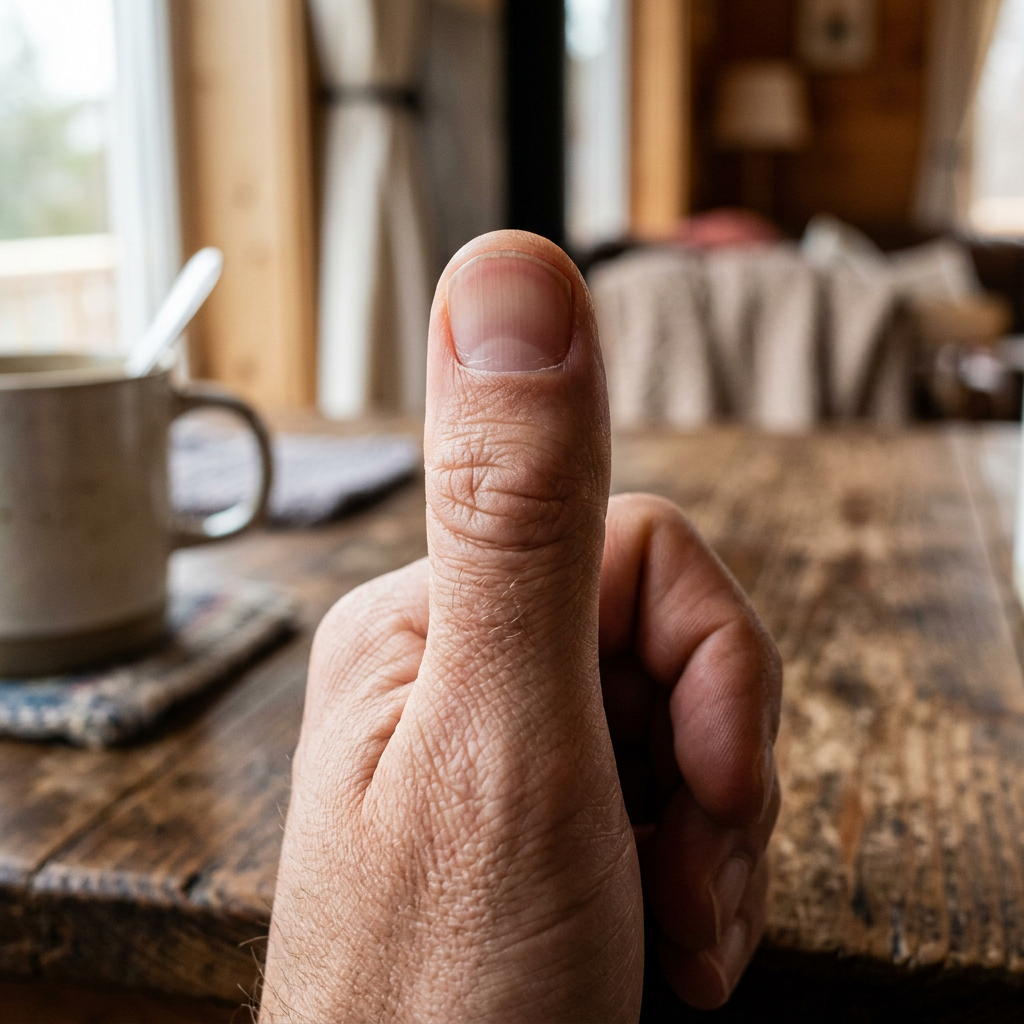
He turned his own thumb slowly in the fading light, flexing the metacarpal against the saddle joint, thinking of opposition, grip, and command. The other digits could align for force or finesse, but the thumb altered the terms of the hand itself. A cat had speed, stealth, claws. Man had the thumb—and with it, surplus.
Surplus food from tilling. Surplus time from efficient harvesting and killing. Surplus thought freed by tools. “Man the tool-maker” was true, but not exact enough. Thumb the enabler came closer.
From there his mind moved outward, as it often did, toward rivers, hunger, and war. He thought of the Nile, whose regular floods compelled measurement and gave rise to line, area, and land made intelligible. He thought of the Ganges, of Dyaus the father sky, of Kshudha in the belly and Kshudha in the mind. Hunger as survival, hunger as intellect. All fires seeking an altar; all altars seeking a river; all rivers flowing under the same immense sky.
He knew his own position in this chain. He was an academic sustained partly by work, partly by name, and partly by the halo that names create. Some read to understand; others to contest. From rivers his thoughts moved, as they always did, toward war: to weapons, and before them to tools. The hidden fulcrum of civilization might not be the sword or the plough, but the thumb that made both possible.
The blood that had once fountained from a thumb-led act remained a secret. Over time, it had become something more than memory—something sacred, disturbing, and unfinished.