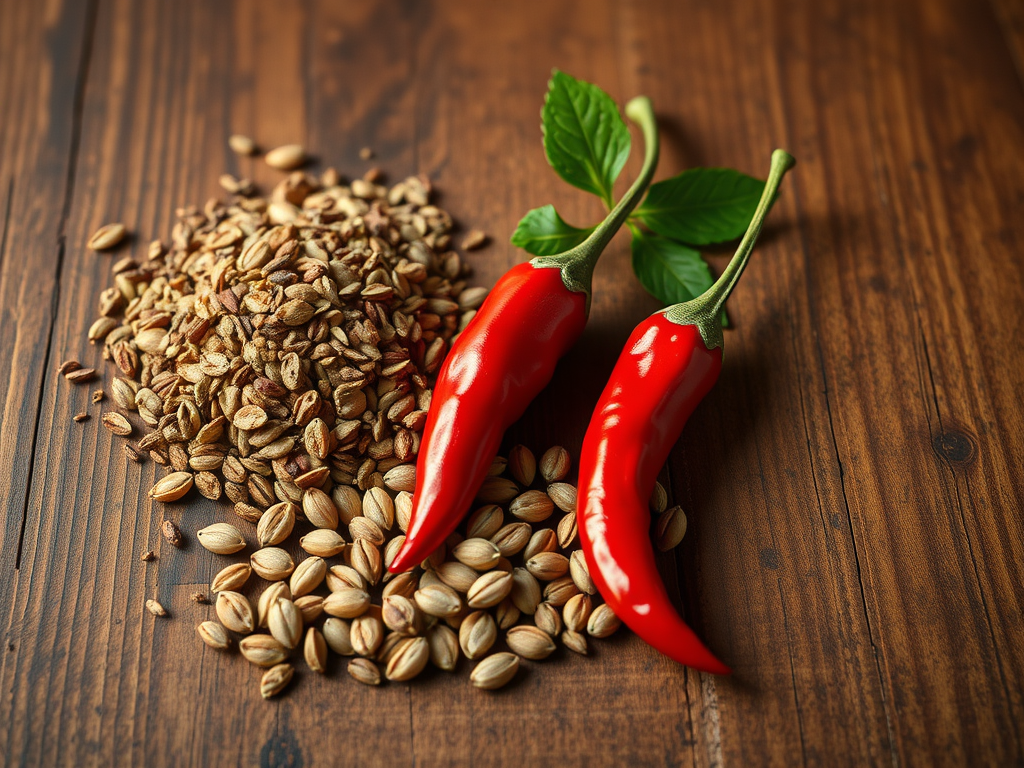
🌿 Kitchen Chemistry #1: Cumin, Coriander & Kashmiri Chilli
Why this classic trio smells so good, looks so rich, and almost never fails.
1️⃣ Cumin – The Smoky Engineer
Botanical name: Cuminum cyminum
- Cuminaldehyde – gives cumin its warm, earthy, smoky aroma (the classic tadka smell).
- γ-Terpinene & p-cymene – add citrus–earthy notes and antioxidant punch.
- α- & β-Pinene – fresh, pine-like, keep the aroma “alive” even after roasting.
When you roast cumin: heat releases volatile oils (especially cuminaldehyde), making it smell deeper, sweeter and more rounded.
2️⃣ Coriander – The Soft Perfumer
Botanical name: Coriandrum sativum (the seeds, not the leaves)
- Linalool – sweet, floral, citrusy; the main note in coriander seed.
- Geraniol – gentle rose-like floral tone.
- α-Pinene & limonene – add freshness and light citrus lift.
Coriander feels “cooler” because molecules like linalool give a soft, perfumed aroma instead of a sharp punch.
3️⃣ Kashmiri Chilli – The Gentle Red Alchemist
Used for: colour, body and a mild warmth – not for intense heat.
- Capsanthin & capsorubin – carotenoid pigments that give the deep red colour; they dissolve in fat and turn the oil red.
- Low capsaicin – much less “burn” than many other chillies, so you get colour without tears.
- Limonene & β-caryophyllene – add light citrus and woody-spicy aroma.
Result: a chilli that perfumes and colours the dish, but doesn’t bully your tongue.
4️⃣ Why This Trio Works So Beautifully
- Cumin: dark, warm, smoky depth.
- Coriander: bright, citrusy, floral lift.
- Kashmiri chilli: rich red colour + gentle warmth.
Together they create a “full chord” of flavour – base, middle and top notes – so the dish feels complete even with very few other spices.
Common home blend: about 2 parts coriander to 1 part cumin, plus Kashmiri chilli “to colour and taste”. Too much cumin tastes bitter; too much coriander tastes flat. The 2:1 balance is nature’s compromise.
5️⃣ A Simple Kitchen Experiment
- Lightly dry roast 1 teaspoon cumin, 1 teaspoon coriander and 1 teaspoon Kashmiri chilli (separately) on low heat.
- Crush each one and smell them on their own.
- Now mix them together and smell again.
You’ll notice a new, rounded aroma that none of them have alone. That “something extra” is what we call synergy – the quiet chemistry of a good masala.