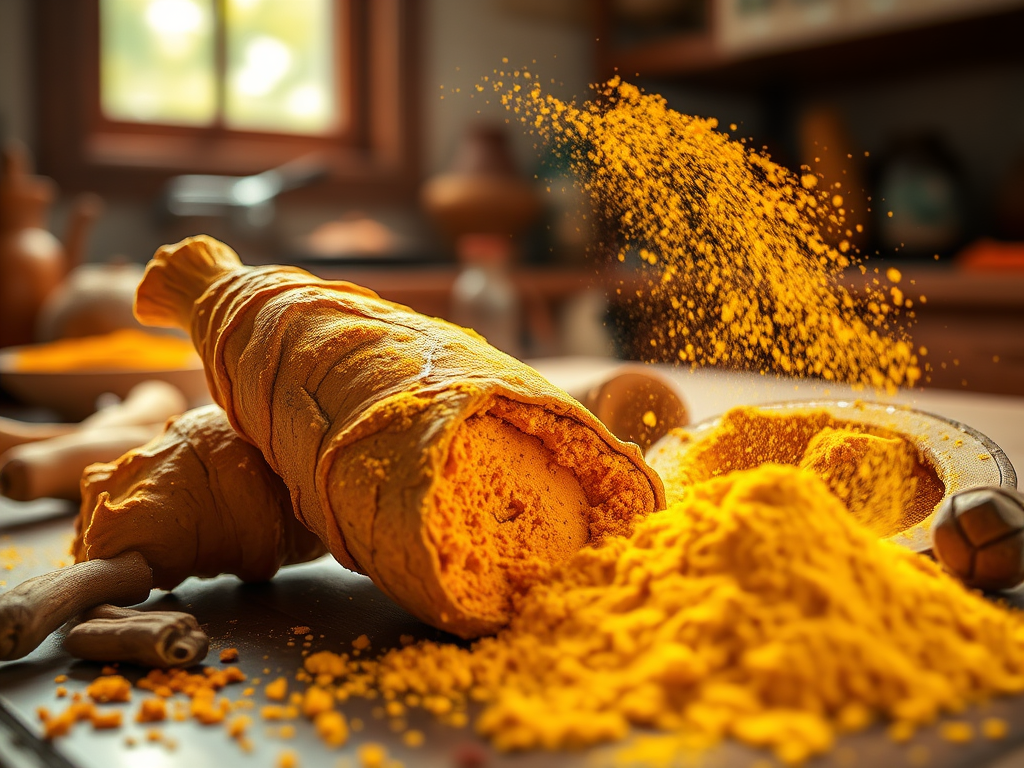
🌼 All About Haldi (Turmeric) — A Complete Guide
What it is, what it does, how it works, and why Indian kitchens use it every single day.
1️⃣ What Exactly Is Haldi?
Haldi (turmeric) is the bright yellow root of Curcuma longa, a cousin of ginger. Inside the root are:
- Curcuminoids — curcumin, demethoxycurcumin, bis-demethoxycurcumin
- Volatile oils — turmerone, atlantone, zingiberene
- Natural antioxidants
- Polysaccharides & minerals
This mix gives haldi its colour, warmth, slight bitterness and healing properties.
2️⃣ Is Haldi Acidic?
No — haldi is not acidic. Its pH is around 7.2–7.5, which makes it slightly alkaline.
This means haldi:
- does not increase acidity
- often reduces gut irritation
- balances sour foods like tomato, curd and lemon
- stabilises curries and dals
3️⃣ What Does Haldi Do in the Body?
Turmeric has gentle but wide-ranging benefits:
- Anti-inflammatory — calms inflammatory pathways like NF-kB and COX-2
- Antioxidant — reduces free radicals
- Gut-soothing — protects stomach lining
- Antimicrobial — antibacterial and antifungal
- Liver-supportive — helps detox pathways
- Mood & brain — may increase BDNF (brain growth factor)
4️⃣ Fresh Haldi vs Powdered Haldi
🌱 Fresh Haldi (Kacchi Haldi)
- richer aroma (volatile oils intact)
- slightly higher curcumin
- more antioxidants
- excellent for drinks, pickles and medicated uses
🌾 Powdered Haldi
- stronger colour
- more stable in long cooking
- easier to measure and mix with masalas
- ideal for daily curries and dal
Best practice: Use fresh for healing + powder for everyday cooking.
Warning: Powder may be adulterated with metanil yellow, lead chromate or fillers — buy trusted brands or grind whole dried roots.
5️⃣ Why Haldi Needs Fat & Pepper
- Curcumin is fat-soluble → absorbs 7–10× better with ghee/oil/milk.
- Piperine (in black pepper) increases absorption by up to 2000%.
This is why haldi is always added to tadka and why haldi doodh includes pepper.
6️⃣ Raw Haldi vs Cooked Haldi
- Raw — earthy, strong, excellent for healing drinks.
- Cooked — smoother, less bitter, better absorbed.
7️⃣ What Haldi Does in Food
- Colours food using curcumin
- Balances salt, sour and spice
- Prevents spoilage due to antimicrobial oils
- Neutralises raw smells in meat/vegetables
- Binds masala when cooked in fat
8️⃣ How Much Haldi Per Day?
1–3 grams daily (½–1 teaspoon) is safe and effective.
Use with caution if:
- gallstones
- taking blood thinners
- severe reflux (rare)
9️⃣ Haldi Myths vs Reality
- Myth: “Turmeric cures everything.”
Truth: It supports healing, not magic. - Myth: “Haldi is acidic.”
Truth: It is slightly alkaline. - Myth: “More haldi = more benefit.”
Truth: Too much is bitter and irritating. - Fact: Haldi works best with fat + pepper.
🔟 Everyday Uses of Haldi
- Cooking: dal, sabzi, rice, eggs, light gravies
- Healing: haldi doodh, pepper-haldi tea
- Skin: haldi + honey + curd mask
- Traditional: haldi paste for minor wounds
Haldi is gentle, intelligent, and timeless — the quiet backbone of the Indian kitchen.