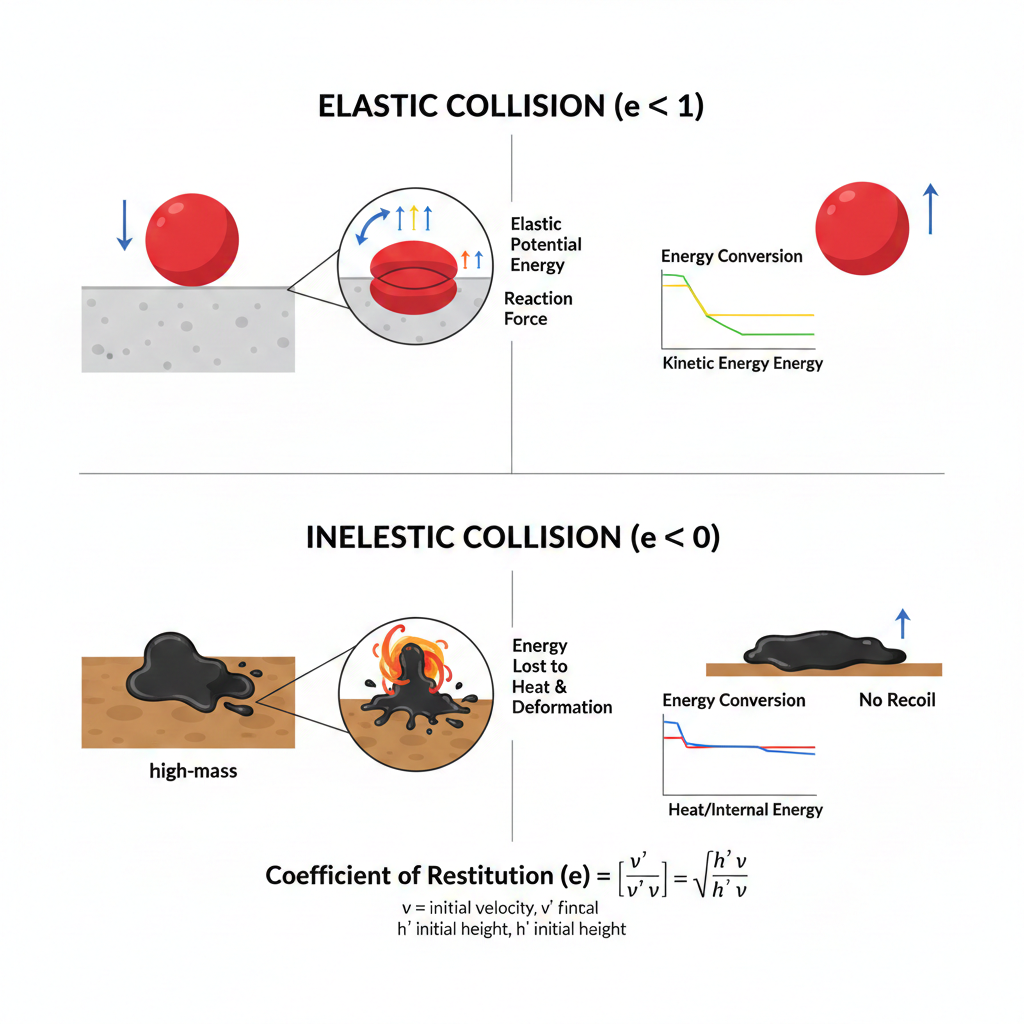
The Entropy of a Bun Omelette: When the World Becomes Flat.It was merely that the world had changed—or perhaps we had.Years ago, Salim and Avni ran a cart selling three simple things: Pao Bhaji, Bun Maska, and Bun Omelette. On lucky days, there was Bun Keema. It was cheap, delicious, and transformative. One bite and the bun omelette melted in your mouth; you immediately wanted another.There was always a crowd—hostel students, passing truck drivers, each carrying whatever haze they were on, savoring the “mescaline-tinged” taste of their fare. We were younger then. The Bohemian student spirit was the catalyst. Salim and Avni thrived on it, keeping rates reasonable, their cart a small beacon of joy in the chaos of the broken wall.The Physics of Youth: Elastic RestitutionIn those days, the world returned us to ourselves. This is what physics calls Restitution—the ability of a body to be restored to “whole” after a temporary deformation.You arrived hungry, distracted, slightly misshapen by the pressures of student life. Your interaction with the cart was an Elastic Collision. You hit that environment, you were “deformed” by the taste, the noise, and the crowd, and then you were released. Because the Coefficient of Restitution ($e$) was high, the energy came back. Nothing essential was lost.The Shift: Plastic DeformationEight years later, the broken wall was repaired. Student egress had been stopped; the students were now cadets dancing to a different tune. The place was deserted. We found Salim outside a vegetable Mandi. The cart was rickety; he was unkempt and defeated. Avni, the entrepreneur—the “spring” of the system—was gone.We had a bun omelette. It didn’t taste of much; it tasted just like a bun omelette.The collision had changed. There was no recoil this time. Whatever energy we brought with us stayed there, absorbed by the “sticky” reality of the Mandi. In materials science, this is Plastic Deformation. Once a body exceeds its elastic limit, the change is permanent. It can no longer return to its original shape. The energy of the encounter didn’t return to us as joy; it collapsed inward as a dull warmth—the internal heat of a memory that no longer moves.The Geometry of the "Giant"A few days later, we tried King Burgher. A trapezium-shaped shop full of customers, meat, and dripping sauce. It was distasteful. It struck us then: the world had become flat.Not because the Earth stopped revolving, but because we had become “Giants.” With mass comes Inertia. We strike the world harder now—armed with theories, proofs, and measurements—and yet we do not bounce. The world gave its treasures to Newton, and we merely counted them.The Fisherman’s SiddhantaIf the theories had not come, or if the “extant proof” were insufficient, there would still be those who understand the revolution of the Earth through Observation.The Surya Siddhanta tracks the movement of the Shanku (the gnomon), but the earthy fisherman sees the dawn every day. The fisherman doesn’t need a pendulum. He watches the horizon shift—the same sea greeting the light in a subtly different way each morning.The theory only restores what the eye once knew. Youth sees the magic without explanation. Maturity demands proof—and then mourns the loss of immediacy. The fisherman never loses it because he never stopped looking.The Take-Home MessageThe “subtle change” is the loss of our recoil. As we gain the mass of experience, we stop being the ball that bounces and start becoming the floor that absorbs. The world feels flat when we stop observing the “turn” and start only counting the “treasures.” To find the taste of the bun omelette again, we must occasionally shed our “theories” and arrive at the horizon as light as a fisherman at dawn.
The Entropy of a Bun Omelette: Physics Metaphors for a Changing World
Discover more from paoofphysics.in
Subscribe to get the latest posts sent to your email.