https://my.clevelandclinic.org/health/diseases/17256-myopathy
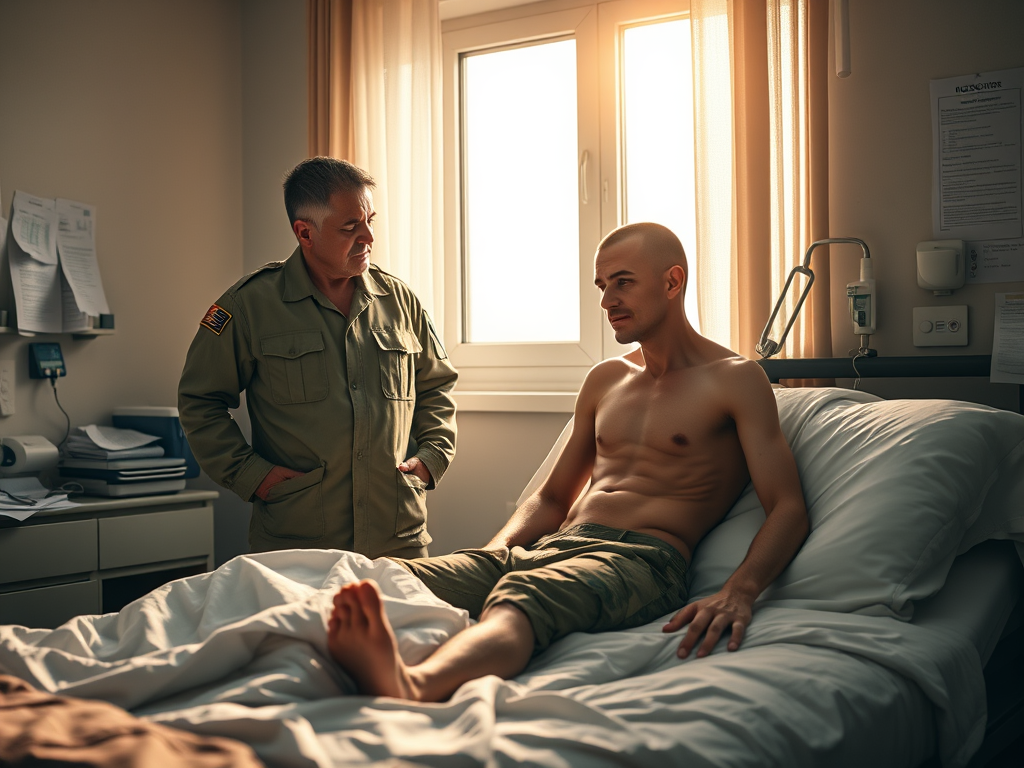
Bopa Rai once took a few young officers to the bedside of one of their jawans and asked him to examine the man carefully.
“What do you think is wrong with him?”
The soldier had a severe, unnamed myopathy. The diagnosis was written all over his body. The pattern of muscle wasting, the posture, the peculiar crippled gait — this was not a problem of nerves but of muscle itself. There was no sensory loss, no reflex abnormality, no spasticity. Pure motor failure.
No hammer was needed. The body itself was the textbook.
Bopa made the officers reason it out step by step until they arrived at the conclusion on their own: primary myopathy.
Then Bopa showed them the prescription.
It contained nearly fifteen vitamins and mineral supplements.
It was expensive.
It was specially arranged for this single patient.
And medically, it made no sense.
No rational treatment of primary myopathy involves a shopping list of vitamins. The soldier’s diet was already normal — the same as any other jawan. His disability was severe, but nutritional deficiency was not the cause.
So Bopa discussed it honestly with the officers.
This was not medicine.
This was ritual.
Somewhere, long ago, a doctor had added one tablet. Another had added one more. Over time, the list grew. Eventually someone simply rewrote the entire bundle as a “summary prescription.” No one truly prescribes fifteen vitamins. What had evolved was not therapy, but symbolism.
The soldier had learned that the length of the prescription reflected the seriousness of his illness and the seriousness with which he was taken.
Reduce the list, and he felt diminished.
Whenever one medicine was stopped, he complained — not of new symptoms, but of neglect. At AIIMS, every visit brought a fresh addition. Not because he needed it, but because he needed to feel seen.
So the question arose: what should they do?
The young officers spoke almost in chorus:
“Sir, let us not make him unhappy by reducing the medicines. He already has enough to suffer. Let us show him that we care.”
They were right.
Those tablets were not curing his muscles.
They were preserving his dignity.
He remained in the army for the same reason any soldier does — to belong, to matter, to be counted among his brothers.
Removing his placebo would not make him stronger.
It would only make him lonelier.
That day, Bopa Rai taught them something no textbook teaches:
Medicine is not only about correcting physiology.
Sometimes it is about carrying a wounded identity.