https://whc.unesco.org/en/list/1572
Bopa and the Geography of Power
O Pan! O Pan!
Io Pan! Io Pan!
Come over the sea from Sicily and from Arcady…
The chant arrived before the man. It always did. Appetite rehearsed itself. Hunger cleared its throat. By the time Crowley walked into Calcutta, the air had already been asked to participate.
Bopa felt it before he saw him — the faint tightening behind the eyes, the disturbance that comes when something performative approaches. Some men walk. Some men enter. Crowley entered, trailing invocation like perfume, confidence like cologne, and an impatience with silence that could be smelt from across the street.
The street, of course, knew nothing of this. Streets rarely do. It continued bargaining, spitting, selling, surviving. The mountaineer couple walked ahead, Everest in their mouths, ambition in their calves, unaware that they had been selected by a curiosity that did not respect intention.
Crowley smiled.
He began to imitate them. Not crudely. Not mockingly. Perfectly. Their gait. Their rhythm. Their posture. Their confidence. He wore them like a costume.
They did not look back. They did not know they were being worn.
Then, suddenly, theatrically, joyfully, Crowley slumped.
Not a stumble. A collapse.
And behind him, in perfect, horrible synchrony, the couple slumped too. Confused. Shocked. Obedient to a command they had not received.
They fell.
Crowley’s smile did not widen. It settled. Satisfied.
Bopa felt no fear.
He felt disgust.
This was not power.
This was appetite.
Later, much later, in a quieter room, Yeats answered.
Not aloud. Not immediately. He answered the way he answered everything — by letting himself be entered and then pretending he had chosen it.
On his desk lay the pages his wife had written while not being there. Automatic script. The hand not his. The ink obedient to something that did not sign its name. Robartes wandered through the margins like a pilgrim without permission.
Yeats read slowly, lips barely moving.
“Turning and turning in the widening gyre…” he murmured, as if testing a temperature.
The room did not reply. It did not need to. The words arranged themselves.
Pan had called.
But something older had rotated.
He took up a pen.
Things fall apart; the centre cannot hold…
Yeats smiled faintly. Crowley wanted the god to arrive. Yeats wanted to know where the god would be standing when the music stopped.
“Pan wants the world to come to him,” Yeats said later, when Bopa stood near the window. “The gyres do not care where anyone stands.”
Bopa did not pretend to understand. He rarely did with Yeats. He simply noticed that the air behaved differently when he spoke.
Crowley summoned.
Yeats mapped.
Different hungers.
Different dignities.
Between them, Bopa stood, quietly aware that power had many costumes, and none of them were comfortable.
It was around this time that Bopa first read of ley lines, in a book by Colin Wilson, and dismissed them with the mild condescension reserved for ideas that refuse to behave. But the notion lingered. Places that hummed. Places that did not merely exist but accumulated. He began noticing them the way one notices weather — not with belief, but with attention.

Some people sensed these places. Others only felt a deep, unaccountable veneration. He saw no contradiction in this. Sensation and reverence did not seem to belong to the same faculty.
Gradually, the pattern revealed itself. These were not isolated shrines. They were nodes. And the nodes were connected.
The lines were not drawn. They were endured.
And somewhere in the geometry — heavier than myth, lighter than fact — stood Kailash. Not dramatic. Not pleading. Simply axial. Two lakes, five rivers, and a reputation that did not need advertising. The centre of the universe, not because anyone said so, but because everything behaved as if it were.
He went north. Or rather, he stopped not going.
Shambhala did not announce itself. It never had. The man who handed him the message did not look like a master. He looked like someone finished with urgency.
“Take this,” he said.
Bopa took it.
He did not ask what it meant. Couriers never do. They only become changed by what they carry.
Calcutta came next. Calcutta always did.
Besant received him in a room that believed in order. Everything in its place. Even the unseen had been shelved.
“Blavatsky erupts,” she said. “Leadbeater perceives. I organise.”
She took the message. Placed it on the table like a difficult file.
“You have seen him,” she said. “Crowley.”
“Yes.”
“He enjoys being noticed,” she said. “That is his only sacrament.”
Leadbeater’s room was different. Charts. Diagrams. Ley lines as supply routes. Partial clairvoyance. Full inventory.
“Power is inefficient if it is not distributed,” he said. “Even revelation requires logistics.”
He spoke of Helena with reverence. Not Madame. Not Blavatsky.
Helena.
The quartermaster was in thrall of the volcano.
Helena herself was… too much.
Powerfully fat. Hypnotic eyes. The room rose to her without being asked. She did not sit. She settled.
“I disturb,” she said.
And Bopa knew this was not boast. It was description.
“Crowley?” she snorted. “A tantrist in a tuxedo.”
She read the message. The air changed.
“Tell them,” she said, meaning the Masters, the north, the silence, “that I am not their stenographer.”
Yeats was different. Brittle. Occupied. His wife wrote. He listened. Automatic writing. Robartes wandering through his own head like a pilgrim without permission.
“I am constructing a system out of my own instability,” Yeats said. “It is very modern.”
“And does it work?” Bopa asked.
“No,” Yeats replied. “But it sings.”
The council gathered.
Besant upright. Leadbeater stocked. Helena wide. Crowley absent but present. Bopa in the middle spaces.
“There will be no more messages,” Bopa said.
The sentence remained.
“He is coming,” Bopa added. “A Master.”
The room adjusted.
Helena laughed. Besant tightened. Leadbeater recalculated.
And then Jiddu walked in.
Not announced. Not deferred. Simply present.
“What will you do,” he asked, gently, “with your fear?”
The word landed clean.
Responsibility, Besant said.
“Responsibility can be fear wearing manners,” Jiddu replied.
Helena laughed, delighted. The furniture lost confidence.
Jiddu did not look at Crowley. He did not need to. He did not look at Yeats’s pages. He did not need to.
Any god who requires calling is already late, he said once, quietly.
Any pattern that comforts is already suspect.
He was not a centre.
He was a hole.
And everything fell quiet around holes.
Helena withdrew soon after.
Not ill. Not weak. Unavailable.
“I am tired of being a crossroads,” she said. “Do not let them replace me with systems.”
Then Bopa left.
He did not inform anyone. He simply stepped out.
The noise peeled away. The air began to behave. Altitude reduced opinion. Trees that had never heard of Helena. Stones that had never met Crowley. Rivers that had not been organised by Besant or stocked by Leadbeater or dictated by Yeats.
He liked this asymmetry.
Higher still, thought thinned. Breath shortened. The land did not care.
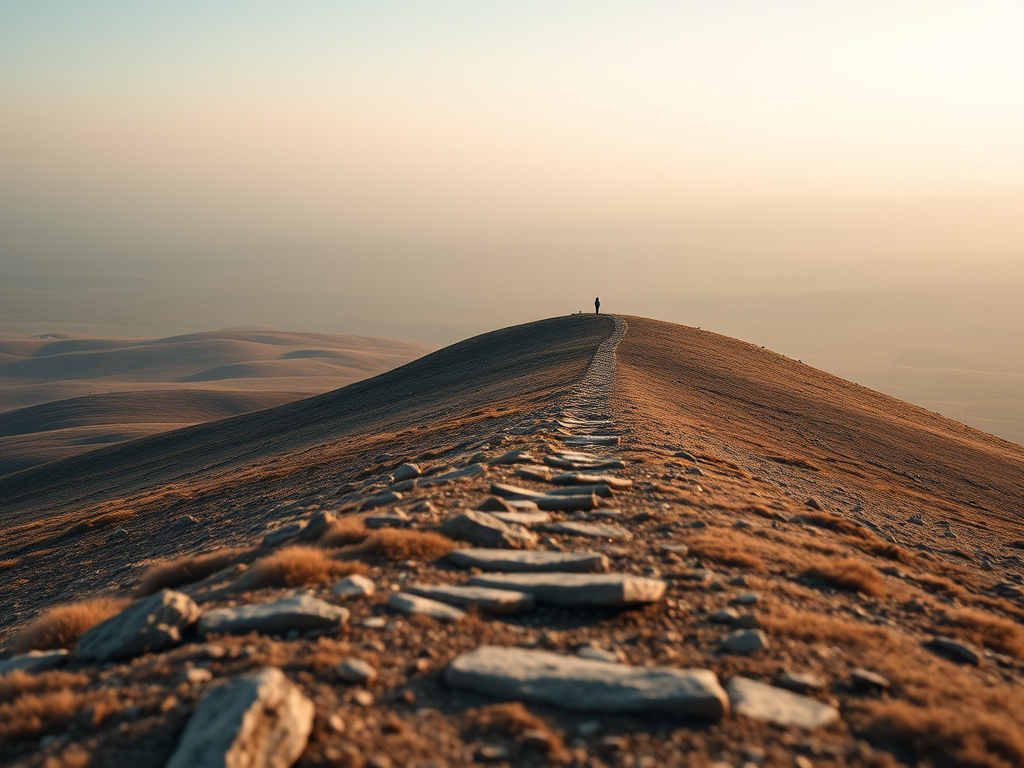
He stood where the land suggested standing.
There was no vision. No voice. No sign.
Only the mountain behaving like a mountain.
He did not say Kailash. He did not think Kailash.
He simply aligned.
And then the other places intruded.
Stonehenge. A circle that did not explain itself.
Göbekli Tepe. Pillars before houses. Meaning before comfort.
Arizona. The rude phallic spire, unashamed, ancient joke. Even Sadhguru had gone there, orbiting it with cameras and gravity.
Different continents. Same pressure.
The crowd came everywhere. Always.
Pilgrims. Scholars. Influencers. Yogis. Men with beads. Women with notebooks. Children with boredom.
The places did not notice.
Bopa understood.
These were not sites of power.
They were sites of indifference.
And that was why they endured.
Crowley performed.
Besant organised.
Leadbeater stocked.
Helena ruptured.
Yeats listened.
Jiddu cut.
The mountains did none of these.
They simply were.
He stepped back each time. Others stepped forward. The place did not care.
He folded the last map, not because he was finished, but because the earth was not.
Somewhere between latitude and silence, the land continued arranging itself without reference to gods, masters, pilgrims, the Beast, or him.