Chapter 1. Sunlight and the Umbrella
In this Pao of Physics Narrative , Dr. Bopa Humanity shines, the fifth breathe is less then half the living level, it has been examined in various ways.
Camus once said it: I lived by the seaside, and poverty was luxurious.
I know this now, in this hushed moment before the chaos, before the stale rum and the coughing patients. Back then, poverty was sunlight—raw, honest, relentless. It was the taste of salt on skin, the laughter of children running barefoot on sand, the scent of fish drying in the wind. It was community, warmth, and a shared struggle.
But now, surrounded by insurance cards and miracle pills like Imatinib, all the luxuries feel grey. Grey as the ceiling I stare at when the rum runs dry, grey as the tired eyes of men who can barely dream of the price of a single dose.
They call it progress. They say the umbrella of insurance is a blessing—a shield against the storm. But this umbrella is not a tree’s shade, cool and welcoming. It is a cold color seeping through the soul, dividing us into us and them. Those under it feel separate, isolated in quiet fear. Those beneath the sun feel naked, yes, but alive.
Is it a communist thought? Perhaps. Or perhaps it is simply the truth that the soul knows when it has lost its way.
And I, Dr. Bopa, am haunted by forgetting this truth. Lost in shadow, I drown guilt in drink and medicine. But beneath it all, beneath the grey, I still long for that sunlight— for the magnificent poverty that once was luxurious.
Chapter 2. The Fifth Breath
The first breath belongs to the newborn, wet and crying, announcing life. The second breath belongs to the soldier, bayonet wound in chest, fighting to hold air against the sucking hole. The third breath belongs to the lover, held too long under sheets, trembling with restraint. The fourth breath is the patient’s last—the rattle, the choke—the sound of departure.
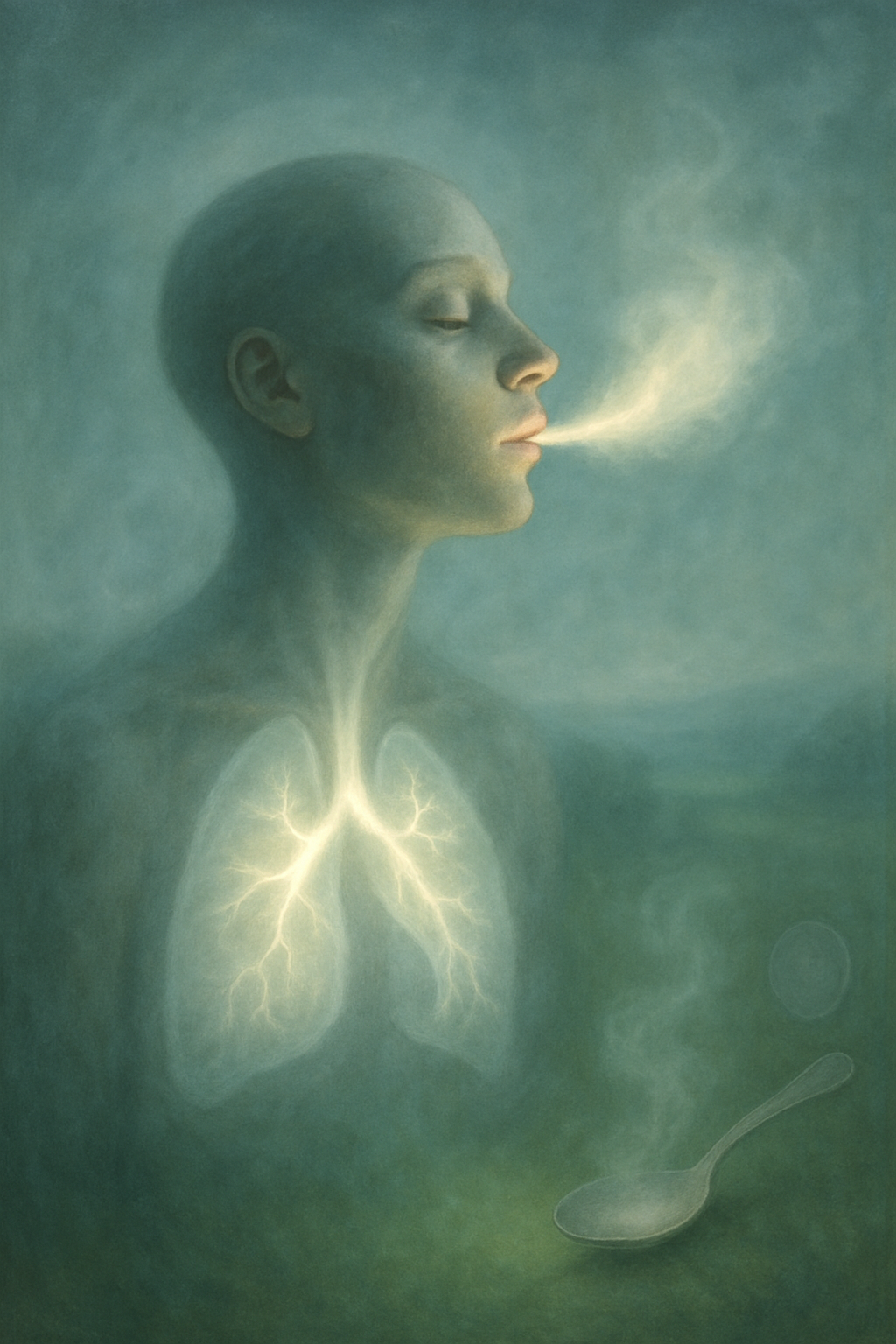
But what, I ask, is the Fifth Breath? If one has passed the fourth, does life linger as a stuttering encore? Or does the very act of breathing slow to such a crawl that the fifth is no longer survival but rebellion—a protest against physiology? The fifthe breathe is of humanity waking

The man before me was not breathing as men usually breathe. Long in, long out. Slow tides dragging the shore. A fifth breath stretched wider than its span. Some call it bradypnoea, others apnoea, but I call it… bewilderment.
Snakebite? Head injury? Too much drink? Too much morphine in veins? Even his chest told me nothing. The rise was too shallow to count. And when I tried, the numbers blurred, my finger pressed on his wrist, but I was counting my own pulse, not his. Once—during internship—my teacher caught me at it. “You fool,” Dr. Aakulwar barked, “the man is dead. You’re taking the pulse of your own panic!” And yet, even in this silence of measures, I felt warm breath on the back of a teaspoon. The crude test never lies.
What to do? Rescuers speak of mouth-to-mouth, of machines, of stimulants. But I am no machine. Machines have numbers, and I have only doubt. I slapped him hard. I pressed his chest with clumsy force—and out popped half a cucumber he had failed to chew. The cough that followed was his resurrection. Mockery of Heimlich, but life just the same.
My name, if you care to know, is Dr. Bopa. The sober ones call me a drunkard, and the drunkards call me a doctor. I reek of alcohol, but still the unwanted find me. Gonorrhoea confessed at my desk. Dying men creeping through the alleys to knock on my door. They say my odour is repulsion, but to them, it is perfume—perhaps because it disguises their own.
No, the world does not honour physicians like me. Modern medicine believes in numbers, in S02, in CT scans, in God’s machines that bill the poor. They forget that clinical medicine was once art, not spreadsheet. They forget that I can smell dropsy, see cyanosis in half-light, hear a coin sign when lungs collapse. My old teacher, General Jaitley—he bent his head, tapped a chest, and diagnosed pneumothorax with a stethoscope battered enough to shame any hospital consultant today.
But for me, diagnosis is less grand. I think not of lungs alone. I think of breathing itself: the act, the absurdity, the unlikeliness of it continuing. Breathing is not neat, not digital. Breath can be obstructed by tumours, forgotten in seizures, stolen by chemists with opiates. It can also be broken free by a sneeze—yes, once I irritated a man’s nose, and the cucumber shot out. Heimlich would laugh or cry.
So tell me: would you, reader, make me your physician? Would you trust yourself to Dr. Bopa, drunk, absurd, and half-banished? No one answers.
But the fifth breath continues. It always does—for the dying, for the exiled physician, for the world that prefers tidy medicine and billion-dollar cures, but still seeks the reek of a shabby healer when no other hope remains.
Chapter 3. The Teaspoon Test
The trouble with young doctors is their faith in machines. Numbers flash on screens—red digits, green digits, alarms that chirp like birds. They listen not to lungs but to gadgets. A pulse oximeter whispers “94%” and they bow as though before an idol.
I have no idols. I have only a teaspoon.
A cold steel spoon, held below the nose of a man sprawled and pale. The question is simple: is he breathing or am I chasing hope? No monitor beeps; there are no digits in the room. But steam gathers against metal, faint and fragile. A whisper of condensation, vanishing as quickly as it appears. That, my students, is truth.
The Teaspoon Test never lies. Not like machines that lose their batteries or saturations that refuse to stabilize because of chipped nail paint or trembling fingers. A spoon is incorruptible—except when I hold it with shaking hands from too much rum.
I learned the test in a ward where silence was thicker than ether. Patient on the bed, motionless. I stared for long minutes, counting, but no chest movement revealed itself. Pulse under wrist? An echo only of my own anxious heartbeat. I tapped, I pressed harder, I swore. Finally I announced my numbers with grave certainty. Only when Dr. Aakulwar stormed in did I discover my shame. “You idiot,” he spat, eyes blazing. “The man is dead. You were measuring yourself.”
Since that humiliation, I trusted not in my own pulse, not even in my own eyes—only in the spoon. If it fogs over, life lingers. If it remains dry and cold, all breaths are finished.
Patients laugh when I tell them. “You are a clown, Bopa. A magician with cutlery.” But I reply: “A clown who saves, a magician who knows when to stop pretending.” You see, there is cruelty in machines—they lie slickly, cover doubt in plastic. A spoon is merciful enough to be honest.
Sometimes I think the whole of medicine is like the teaspoon test—condensation on cold certainty, disappearing at a glance if one blinks too slow. Life itself a mist. Breath a ghost.
My colleagues prefer their machines, their numbers. Good for them. But when the generator dies, the batteries empty, and glass screens shatter in the dark, they will come searching for the teaspoon in my pocket.
And I will ask them—as I ask you— tell me, is it enough to trust a spoon? Or is breathing itself the cruelest lie?
Chapter 4. The Coin Sign
Every doctor carries ghosts. Mine walk with me in white coats that no longer exist. One of them is General Jaitley, a man who taught without mercy and diagnosed without hesitation.
His favourite trick was the coin sign. He would place a silver rupee flat against the chest wall of a patient, tap it with another coin, and listen with his stethoscope as though the man’s ribs were a gong. If the sound rang hollow—like metal struck over a cavern—he would smile, dark and satisfied: “Pneumothorax.”
No CT, no X‑ray, no ultrasound. Just sound, coin against bone. The patient would be sent off to radiology anyway—because the hospital demanded proof—but the report always came back confirming what he already knew.
I remember standing there, scrawny and doubtful, thinking: Is medicine this simple? A game of tapping coins? Perhaps it was. Or perhaps it was Jaitley himself, who carried the confidence of generations, a man unshaken by blinking monitors and reports written in capital letters.
You will laugh, but today a single pneumothorax patient walks through three departments, pays six thousand rupees, stares at MRI tubes like coffins, before someone dares whisper “collapse.” And often by then the air has turned fatal, tension pushing the heart aside. Meanwhile, Jaitley needed only two coins and his ear. Honest tools, unpretentious.
I tried the trick myself in later years, of course. Sometimes I heard it, sometimes not. Was it my stethoscope, battered from my pocket? Was it my ear, clouded with drink? Or was it simply that I lacked his conviction—that rare beast which transforms doubt into diagnosis? I could never tell.
Machines have changed the soundscape of wards. Beeps, alarms, Doppler swishes. No one carries a rupee coin for percussion anymore. A pity. Not because every coin sign was true, but because it forced us to listen—to dare placing our ear close enough to hear the chest speak directly.
And I ask you now: What do we lose when we stop listening, when we let screens speak in place of lungs? How many ghosts of diagnosis are exiled by machines too clever to doubt themselves?
General Jaitley is gone, his trick buried with him. I remain, with half‑drunk fingers and half‑trained ears, still tapping, still hoping. Sometimes I hear the coin whisper back. Sometimes it sings.
And in those moments, I remember that medicine is less about certainty than courage. The courage to say: I heard it. I know it. Even if all the machines laugh in your face.
Chapter 5. The Nose Irritation
Let me admit it plainly: sometimes medicine is not a science at all. Sometimes it is… irritation.
I recall a man—blue lips, choking, throat obstructed. Nurses flapping, relatives wailing like crows, and no one brave enough to do more than shout “call for suction!” or “fetch the tube!” In such chaos, confidence drops faster than oxygen.
I had no suction. No tube. What I had was a long fingernail and a desperate idea.
I reached forward, scratched his nostril sharply, and the man sneezed with a violence that would make a cannon blush. Out flew the offending particle—a fragment of cucumber, slick and half‑chewed—and with it, the grim silence broke. He coughed, gasped, and lived.
Now, to hear the nurses retell it later, you’d think I resurrected him with sorcery. “Dr. Bopa has magic fingernails,” they whispered. Others laughed, saying my cure was vulgar, unbecoming of “civilised clinical protocol.” But vulgar though it was, the patient walked out alive.
That is the problem with medicine today: it is obsessed with dignity. Guidelines, manoeuvres named after stern creators—Heimlich, Trendelenburg, Glasgow this, Ottawa that. But dignity never saved a man. A sneeze did.
You see, fellow physicians will polish their techniques until they gleam, but I keep to my low tricks—unwashable, absurd, ridiculous. Why? Because death itself is absurd. To outwit it, one must stoop lower than its logic, tickle its nose, and make it laugh.
Of course, after the incident, colleagues mocked me endlessly. “Shall we replace suction machines with your fingers?” “Shall the noble Heimlich be renamed the Bopa Nose Itch manoeuvre?”
I raised my glass to them. “Call it what you like,” I said. “So long as the man still sneezes, I’ll drink to him.”
And I tell you this: somewhere in the world, that patient still sneezes. Perhaps once a day, perhaps once a week—but every sneeze a reminder that a ridiculous doctor gave him back his breath.
Let my detractors laugh at it. Legends have always grown from laughter.
Chapter 6. The Outcast’s Waiting Room
Every clinic has a waiting room. Mine is less a room and more a confession booth where the walls groan under secrets. No rows of plastic chairs, no token machines, no polite magazines spread on glass tables. Only wooden benches, cracked and creaking, their polish long ago absorbed into the backsides of the poor.
It begins with the smell. I will not deny it—rum clings to me like a second coat. Patients wrinkle their noses, yet sit down anyway. They know that if one can tolerate my stink, I will tolerate theirs.
And what patients come! Not your shining bureaucrats, not your glucose‑counting diabetics with neat files from Apollo Clinic. No. Here sit the gonorrhoeal, the unwanted, the coughing labourer spitting blood into his kerchief, the trembling girl afraid to say she is pregnant, the addict with eyes yellow as rot. The kind of humanity society hides behind curtains.
To them, I am not disgrace. I am sanctuary. Because, you see: a drunk cannot shame a syphilitic, a man with no prestige cannot humiliate a woman already abandoned. My smell becomes a kind of absolution, proof that their misery is ordinary here.
They whisper my name like one whispers to a whore. “Go to Bopa. He won’t ask questions. He won’t report you.” They come discreetly, in the evening shadows. And yet, curiously, they never stop coming. Outsiders imagine my practice fell to ruin; insiders know it overflows each night with the rejected.
Sometimes, I sit in the centre of this congregation like a failed priest, pouring cheap liquor into a steel tumbler, and I hear their confessions. Not all medical. Some cry of beatings at home. Some of hunger. Some of God refusing to answer. It is not medicine alone they need, but someone who stinks worse than them and lives anyway.
I treat where I can—an injection, an antibiotic tablet, a pressure check scratched on scrap paper. Other times I only listen. And occasionally, by trick or accident, I save a life: a sneeze here, a teaspoon there, coins upon a chest. A drunk lottery of medicine.
Would I pass for a respectable physician? Never. Would my patients trade me for one? Rarely. Because respect is expensive, while my disgrace costs only the courage to enter.
Yes, my waiting room is pungent, crowded, barren. Yes, it reeks of death. But life is not ashamed to come here. Life, though filthy and half‑chewed, still comes—and that is enough.
Chapter 7. The Resurrection of Bopannah
It happened on an ordinary night, heavy with liquor fumes and silence. I had just finished with the last patient, a boy with ulcers on his face, sent away clutching a bottle of brown cough syrup stronger than his future. The benches were empty. The rum bottle was half. My body demanded a piss.
I shuffled into the small back toilet of the clinic. Cracked tiles. A bucket with no mug. Walls sweating mildew. The kind of place you would never want to see your doctor enter, yet every doctor eventually does.
When I finished and tried to push the door open, it refused. I shoved harder, insulted the latch, bellowed at the universe. Then—suddenly—it gave way not to the waiting room, but to green meadows bathed in morning light.
I stumbled out, trousers still loose about my waist, and found myself young again. Younger than I had ever been as a doctor. My beard gone, my back straight, my skin without stain. I opened my bag—it was new, stitched leather, not the cracked relic I knew. My certificates lay inside, but their dates had changed: stamped this very year.
I was reborn. Not as Dr. Bopa the drunk. But as Dr. Bopannah—a lord of medicine, as my name now seemed to mean.
Birds chirped. A breeze lifted. I felt hunger for patients, not for alcohol. In this life, perhaps, I could practice the art without disgrace. Perhaps my waiting room would be filled not with whispers, but with gratitude.
And yet— Even in that meadow, I reached into my pocket and felt for the old spoon. It was still there. Cold, faithful, waiting to fog over with the faint dampness of some stranger’s fifth breath.
I laughed then. What kind of fool carries his poverty into paradise? But perhaps this is the truth: you cannot shed the absurd tricks that once saved lives. A sneeze, a coin’s ring, a fogging teaspoon—they are stitched into my soul as tightly as my name.
So I walked forward, young Dr. Bopannah, lord of nothing, king only of breaths. The meadow stretched before me like a fresh clinic without walls. I was ready again to count, to miscount, to irritate noses, to slap chests, to hear coins, to fog spoons. I was ready to continue—even if the world still laughed.
And I thought, as I marched into that meadow: perhaps this is the true Fifth Breath— not the patient’s, but mine.
And in that breath, I understood: it is courage that matters most.
Comments
4 responses to “The Fifth Breath — from the notebooks of Dr. Bopa”
[…] The Borderland […]
[…] The Fifth Breath — from the notebooks of Dr. Bopa […]
[…] The Fifth Breath — from the notebooks of Dr. Bopa […]
[…] The Fifth Breath — from the notebooks of Dr. Bopa […]