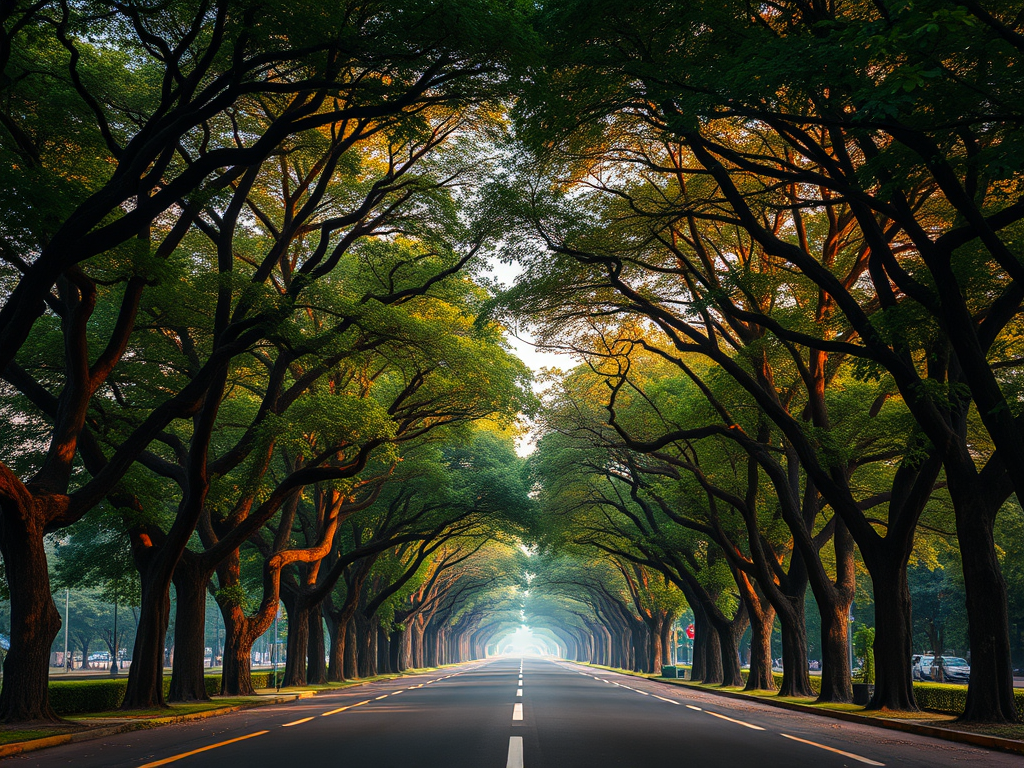
: A Census of Trees and a Study in Urban Intent
Based on a 2015 HUDA survey reported by Srishti Choudhary
Panchkula, often perceived as an orderly extension of Chandigarh’s modernist dream, carries within it a quieter, more organic architecture — its trees. In 2015, the Haryana Urban Development Authority (HUDA) undertook a first-of-its-kind survey to map and count the city’s trees. The exercise, triggered by complaints of illegal cutting and the absence of reliable data, revealed a surprisingly rich and structured arboreal landscape.
The survey, conducted between April and August 2015, documented 32,717 trees across approximately 20 varieties within Panchkula Urban. Only trees with a girth of more than one foot were included, and the count focused on trees along roads, medians, and parks maintained by HUDA, excluding those inside residential sectors under Municipal Corporation care.
The Green Geography of Panchkula
Tree density was not evenly distributed.
- Sector 5 emerged as the greenest, with 2,774 trees
- Sector 20 followed with 2,504 trees
- High counts were also seen in Sectors 27 and 10
- The sparsest sectors were 19, 16, 17, and 18
Even in a planned city, greenery follows its own quiet politics — shaped by width of roads, early planting decisions, and later neglect.
The Chosen Species: Order, Ornament, and Control
Among the most common species recorded were:
- Terminalia arjuna (Arjun tree)
- Schleichera oleosa (Kusum)
- Cassia siamea (Kassod tree)
- Putranjiva roxburghii (Putranjeevi)
These were not random choices. HUDA horticulturists described them as ornamental trees suited to local climatic conditions. Kusum with its coloured foliage, Kassod with its bright yellow flowers — beauty was clearly a design parameter.
But there was also an engineering logic at play.
Earlier, Panchkula had a large number of Ficus virens (Pilkhan) — a species valued because it does not dry easily. Over time, however, its aggressive growth pattern became a liability. When planted along roads, its branches entangled with electricity lines, creating maintenance and safety problems.
The response was botanical pragmatism:
Putranjiva roxburghii was promoted because it does not grow beyond a certain height. A tree chosen not for its majesty, but for its obedience.
Urban forestry, it turns out, is as much about wires and transformers as it is about shade.
The Medicinal Paradox
Terminalia arjuna occupies a special place in Indian tradition. Its bark is widely used for cardiac ailments. But HUDA officials issued a caution that cuts deeper than it seems.
They noted that while residents are aware of Arjun’s medicinal value, bark harvested from roadside trees is often polluted. Trees along busy roads absorb heavy metals and airborne toxins. Using such bark for healing, they warned, may do more harm than good.
It is a quietly tragic irony:
the tree of the heart, poisoned by traffic.
Experiment and Failure
The survey also revealed attempts at experimentation. New species were brought in from Bangalore and planted, but they failed to adapt to Panchkula’s conditions. The city, despite its planned geometry, has its own ecological temperament. Not everything imported thrives.
Why This Census Matters
HUDA officials were blunt about the motivation.
The survey was initiated after complaints of illegal tree cutting and the realisation that no complete data existed. The census now serves as a baseline. Authorities stated that tree counting would be done annually to keep a check on illegal felling.
In other words, numbers were summoned not out of love for trees, but because something was being lost.
Still, once counted, something becomes visible. And once visible, it becomes harder to erase.
Panchkula’s trees are not merely decoration. They are a record of planning philosophies, utility compromises, aesthetic preferences, and administrative anxieties. They show us where idealism stood, where pragmatism intervened, and where neglect crept in.
In their spacing, species, and survival, they tell the story of a city that wanted to be modern — and had to become manageable.