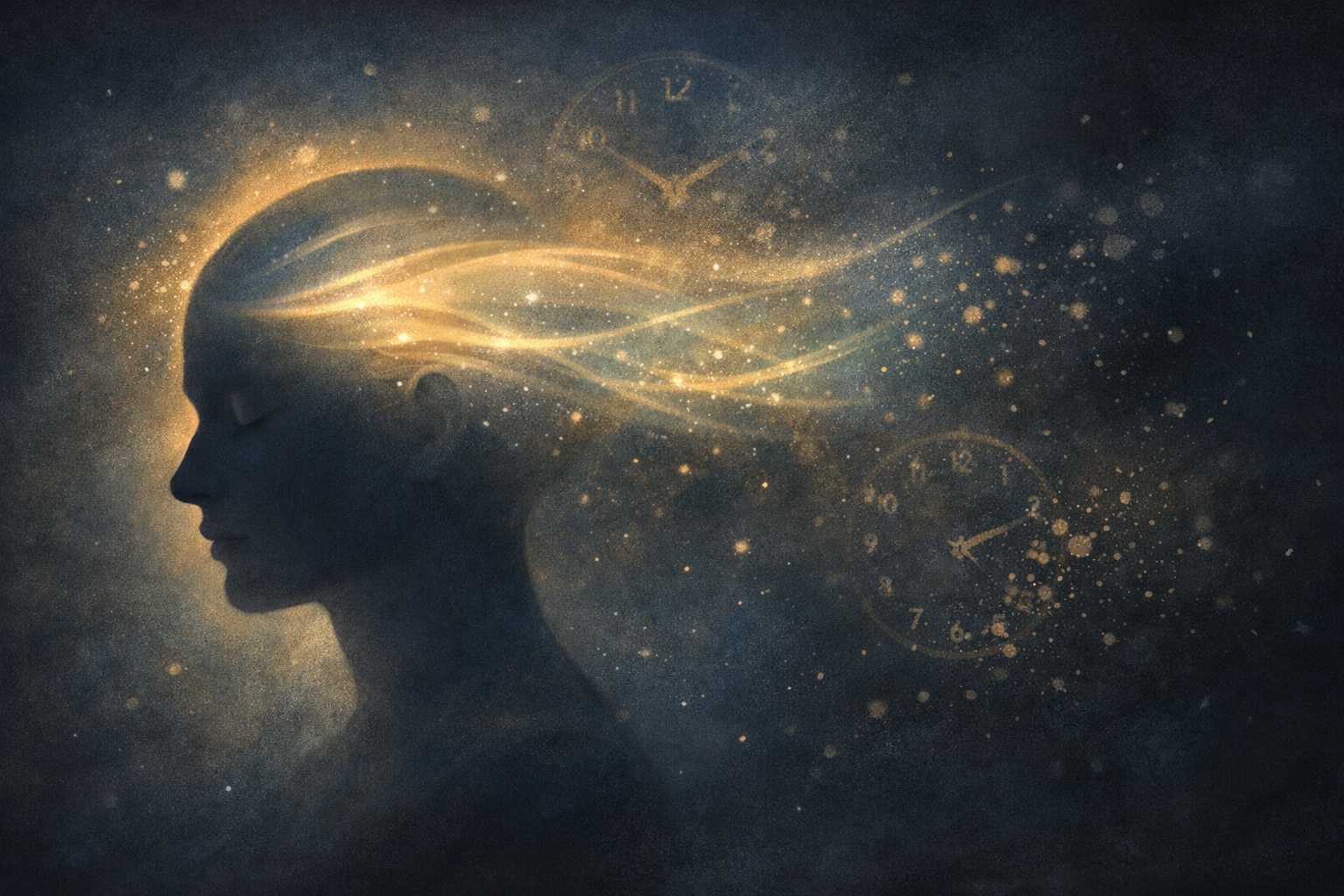
War, Anesthesia, and the Physics of Waking Up
Introduction: A World Burning Forward
The world in January 2026 remains profoundly at war. Conflicts rage across continents, driving massive and irreversible entropy increases: lives dissipated, cities reduced to rubble, ecosystems degraded, and social orders fractured. The thermodynamic arrow of time marches forward through destruction—nothing rebuilds spontaneously from chaos without enormous external input.
Ukraine–Russia. A grinding war of attrition persists, with Russian incremental gains in Donetsk and elsewhere amid nightly barrages of drones and missiles. Ukraine defends fiercely but faces ongoing energy blackouts and civilian hardship.
Middle East (Gaza–Lebanon). Hostilities in Gaza have ebbed after intense phases, with Israel expanding security buffers. Yet flare-up risks remain high. Strikes against Hezbollah in Lebanon continue despite ceasefires, perpetuating cycles of retaliation.
Sudan. Civil war inflicts atrocities, mass displacement, and famine—now among the world’s gravest humanitarian crises.
Myanmar, Haiti, the Sahel, Yemen. Junta advances, gang dominance, insurgencies, and proxy wars add layers of disorder, hunger, and irreversible loss.
These are stark examples of entropy in action on human scales: gradients of order collapsing into high-entropy states of suffering and decay.
The Personal Counterpoint: Falling Out of Time
Against this global backdrop of accelerating disorder, a quiet and personal wonder stands out—one that feels almost counter-entropic in its affirmation of life’s resilience.
During my recent laminectomy surgery under general anesthesia, I experienced a profound clean break. Subjective time vanished entirely.
I retained factual knowledge that surgery had occurred, but the hours themselves did not exist. There was no sense of duration, no flow, no waiting. It was not darkness. It was nothing happened.
This blackout reflects the brain entering low-entropy, highly ordered states: repetitive EEG patterns, suppressed neural complexity, and minimal entropy gradients. With no detectable change, there was no qualia of time.
No change registered → no experience of time passing.
The Reboot: Entropy Returns
Emergence was equally striking: a slow, stepwise reboot.
Nurses used simple probes:
- “What is your name?” (orientation to person)
- “Where are you? What day is it?” (place and time)
- “Squeeze my hand.” (motor obedience)
- Light shone into my eyes (pupillary reflex)
These minute things took about a minute, yet cleared vast brain territories:
- Cortex for cognition and affect
- Language networks for comprehension
- Brainstem for reflexes
- Motor pathways for action
Each response signaled resuming entropy detection:
light energy dissipating into neural signals, sound waves triggering irreversible firings, effort translating into movement.
Consciousness snapped back as awareness of these entropy changes—experienced subjectively as time returning.
Not Just Human: A Cross-Species Pattern
This phenomenon is conserved across animals.
Dogs and cats recovering from anesthesia often wake disoriented: groggy, ataxic, sometimes briefly aggressive. Recognition of owners and routines may take hours.
Hibernating mammals show even more dramatic emergence:
near-zero metabolism suddenly explodes into life, body temperature surges, brain activity rebuilds from low-entropy silence into high-complexity patterns.
From the animal’s perspective, there was literally no time.
Then: now.
From flies under anesthesia to primates, this slow reboot suggests something fundamental:
Consciousness is awareness of entropy change,
and time is how that change feels.
Suppress gradients → time disappears.
Restore gradients → time resumes.
Echoes in Science and Philosophy
This framing has strong convergences in existing thought:
Entropic Brain Hypothesis (Carhart-Harris et al., 2014)
Higher brain entropy correlates with richer consciousness (psychedelics).
Low entropy suppresses it (deep sleep, anesthesia).
Eddington’s Arrow of Time
We experience time’s direction because we register irreversible processes.
Penrose and Carroll
Psychological time derives from thermodynamic time; memory formation exports entropy, creating past–future asymmetry.
Prigogine
Life and mind as dissipative structures: order sustained only through continuous entropy production.
My contribution is clinical and phenomenological: the reboot itself is the proof.
War, Sleep, and the Limits of Experience
War represents maximum entropy production.
Anesthesia represents minimum detectable entropy.
Both distort time:
- War makes time unbearable.
- Anesthesia removes it entirely.
Normal life sits in between—just enough entropy to feel real.
| Regime | Entropy | Subjective Time |
|---|---|---|
| War | Exploding | Traumatic, overwhelming |
| Anesthesia | Suppressed | Absent |
| Waking life | Moderate | Flowing |
Too much entropy → suffering.
Too little entropy → nothingness.
Just enough entropy → experience.
Conclusion: The Quiet Defiance of Biology
In a world producing entropy through violence and collapse, biology offers a quiet defiance.
Order can reboot.
Awareness can resume.
Time can feel new again.
A human being does not return through metaphysics or meaning.
They return through light in the eye, a hand squeeze, a name spoken aloud.
Not philosophy.
Not spirit.
Entropy flowing again.