https://www.orpha.net/consor/cgi-bin/OC_Exp.php?Expert=98746
Pao of Physics
Dance Of Chorea
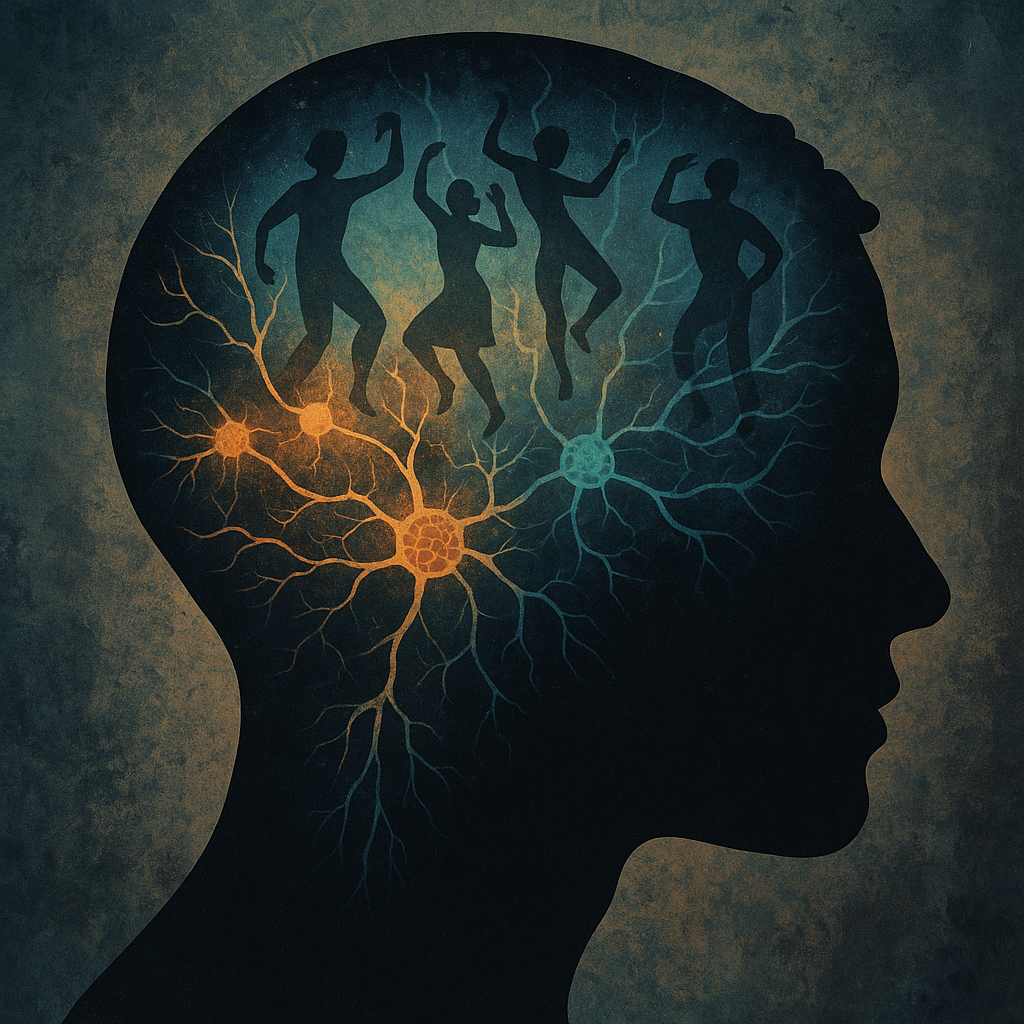
Bopa Rai., the resident trainee had the tentative dignity of one still learning to be ignored. He straightened his back when he saw the referral. It was a chorea case — not a common one — and it had come from one neuro-giant to another. The latter was technically junior in service, but in strength, stature, and cerebral reputation, he was no less a colossus. Chorea is a movement disorder of involuntary dance like movements. It belongs to the same class as hemiballismus, which means sling shot movement. Athetosis is a snake-like slow dance. Chorea resembles a nervous tick. The patient tries to hide or mask it with other movements. Semifirmally, this class may be described as Chorea. It involves irregular, brief, rapid, purposeless movements. These movements flow randomly from one body part to another.
- They often look like “fidgeting” or a nervous tick. Patients sometimes camouflage them by blending into purposeful movements (called parakinesia).
Athetosis:
- Slower, writhing, “snake-like” movements, especially of the fingers and hands.
- Sometimes overlaps with chorea, leading to the term choreoathetosis.
Hemiballismus:
Classically linked to lesions of the subthalamic nucleus.
Violent, flinging (“sling-shot”) movements, usually on one side of the body.
Bopa prepared a tidy case note. The young woman, 25 or so, had visited thrice already. He had methodically excluded rheumatic chorea, pregnancy, autoimmunity, psychogenic origins. Nothing common held water. He stood before the twitching girl and scratched his head. The OPD’s real owner swept in silently and imperiously. He offered no glance to the staff, the patients, or Bopa himself.
Bopa reminded himself of past glories. He had once independently diagnosed Huntington’s disease. A wife described her husband’s father dying of “Hilti Bimari” — a shaking illness at age 50. That phrase had sealed the diagnosis and earned Bopa momentary elevation. He had read Adams’ Principles of Neurology afterward, a victory lap in book form.
But now, the girl’s condition was unclear. He decided to take her to the King of Neuro. This was the administrator of Botulinum toxin, the feared and revered elixir. How could Bopa have known? In just a few years, cosmetologists would be injecting this poison into foreheads. They would also inject it into cheekbones in every upscale market.
The neuro-giant heard Bopa’s summary, pocketed his car keys, and leaned in for a perfect plantar reflex. He traced the sole’s edge, heel to toe, silent as a monk. “No reflex,” he muttered, repeating it on the other side. Did an ankle jerk too, absent again

Bopa intoned dutifully: “L5, S1. Absent superficial plantar.” He wasn’t especially alarmed — he could rarely elicit plantars even in hemiplegia.
But the neuro-giant had smelled something. He scribbled on the file:
Diagnosis: Neuroacanthocytosis
Tests: CT brain, peripheral smear, Lipid profile
Instruction: “Present at the conference. Get the results pronto.”
Bopa sprang into action. He made a sequence chart –
Low cholestrol – Membrane defects – RBC become spiky- Neorons lose lipid in absent relxes in long nerves – caudate nucleus degenration – chorieform dance
At the hematology lab, he drew blood, made the smear himself, and asked the HOD to scan it carefully. Bopa peered into the microscope too.
“I think I see acanthocytes, spiky RBC’s” he offered.
The professor sniffed. “Artefacts.”
Still, Bopa reported back. The neuro-giant responded with citations, case papers, diagrams. Within hours, acanthocytes were officially, albeit grudgingly, reported.

At the biochemistry lab, the lean, ascetic HOD flicked his eyes over the cholesterol value and hissed —
“If the cholesterol is 100, then yes — Beta-lipoprotein is there. But I don’t want your sample.” Your request is not founded on facts. It is like when you see a tree, you ask where the seed is.
He turned his face in disdain. “Lipoprotein analysis,” he declared, “is what we do — or don’t do. No shortcuts.”
Back then, lipoprotein bands were everything: beta, pre-beta, HDL, LDL — not the lazy “profiles” of today.
The Radiologist glanced at the CT request and sighed. “MRI would be better — symmetry, details, you’ll see more.”
“But the money’s not there,” Bopa said.
So CT it was. And yet, it did show something: asymmetry of the caudate nuclei — subtle, but present.
That night, Bopa sat with the film, the smear report, and his unspoken thoughts. Slowly, a chain of reasoning assembled itself — fragile, elegant:
Acanthocytes in the smear
→ Defective RBC membranes
→ Defective neuronal membranes
→ Degeneration of caudate nucleus
→ Chorea
The absent plantar reflexes? Perhaps the thick rubber slippers. But more likely:
Reflex arcs are long.
Long nerves die quiet deaths.
No reflex is not no disease.
At the case conference, Bopa presented the story — plain, factual, unresolved. The Head of Neurology stood up, a dramatic pause, and announced how even he had been fooled by the case.
But the neuro-giant had spotted it, named it, made it mundane.
Back-thumping followed. Laughter. Clinical awe.
Then, as applause settled, Bopa escorted the twitching girl — still untreated — to the women’s ward.
Comments
3 responses to “Pantomime of ChoreaUnraveling Neuroacanthocytosis: A Clinical and Biophysical Puzzle” Pantomime of Chorea”
so in the end what hapened? The end is an anticlimax. Or am I too naive to understand. One thing is sure, that cholestrol is important. Sub normal levels of cholestrol supposedly can lead to dementia, alzheimers and other neuro degenerative ailments with rapid cognitive decline. So why does bigpharma peddle statins?
I think you got it, once you know the name , you know something about it, so do no evil.
[…] Pantomime of ChoreaUnraveling Neuroacanthocytosis: A Clinical and Biophysical Puzzle” Pantomime of… […]