The Butcher, the River, and the Bridge
The Unfinished Search
A Brahmin, learned and sincere, found himself unable to realise himself.
He was not restless in the ordinary sense, nor rebellious. He simply felt that something essential had not arrived. So he went from one guru to another, as one goes from town to town when a train does not stop.
The first guru instructed him to repeat the names of a hundred and eight gods, then to chant “Om Namah Shivaya. He did this faithfully for three empty years. When he returned and asked if anything had happened, the guru answered truthfully. Nothing out of the ordinary had occurred. His mind was calm, daily tribulations no longer disturbed him, and he was at peace.
The Brahmin listened carefully and said he, too, wished for such peace. The guru, seeing no reason to mislead him, sent him onward to another.
So it went on. Referrals multiplied. Another guru gave him a longer mantra, more intricate, demanding perfect pronunciation and sustained effort. Day after day, he chanted, listening for the precise note that was said to unlock something hidden. Years passed again. Nothing happened.
His wife and parents watched him move from place to place, practice to practice, without arriving. They did not mock him, but they worried. Someone told them of a butcher, an unlikely man, who was said to be a siddh. After some hesitation, the Brahmin agreed to seek him out.
The Butcher
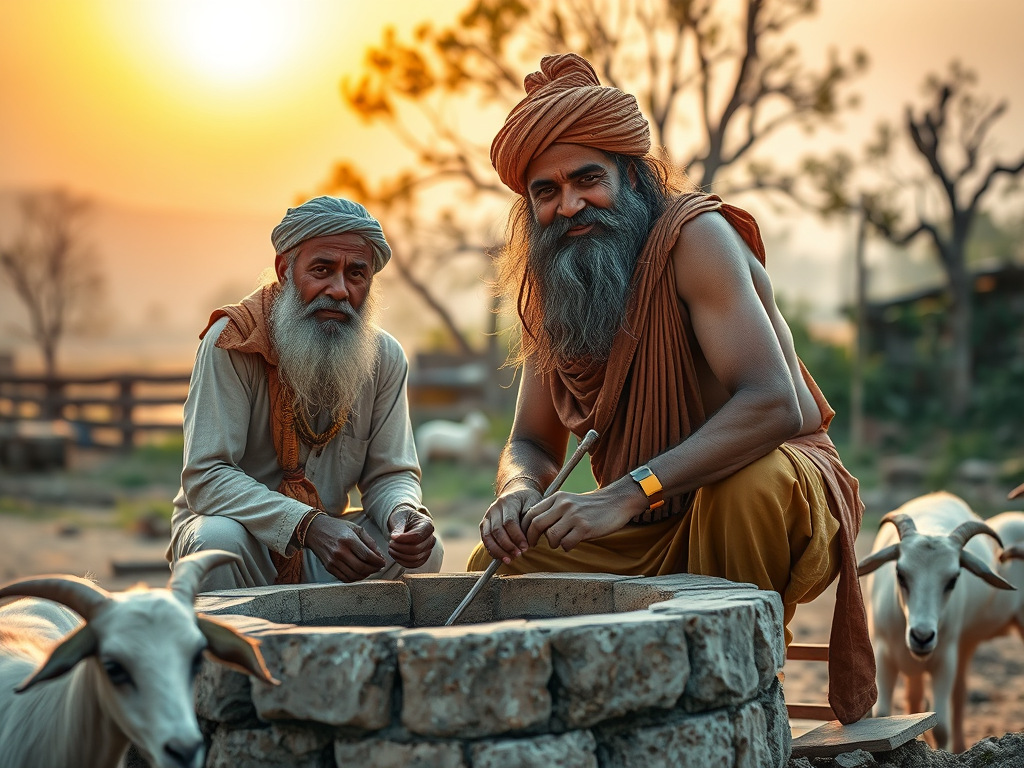
The butcher listened to the Brahmin’s request and shook his head. He said he would give no mantra. If the Brahmin wished to stay, he would have to work.
At first, the Brahmin recoiled. But on reflection, having exhausted his resistance, he agreed.
The next morning, the butcher explained the covenant. A well had to be dug. The herd of goats had to be taken out daily for grazing and watering, and not a single goat was to be lost. When the day’s work was done, the Brahmin was to come to the shop and become familiar with the body — not in theory, but as it is — each part, each joint, each weight and balance. If he wished, he could repeat any mantra as he did this.
Days passed into weeks. Weeks passed into seasons. At night, the Brahmin found that he could no longer remember the mantras. Sleep would come gently, and he would close his eyes before any effort could be made. He noticed this without concern.
The well was completed. Water came. Thirst ceased to be a question.
Work Without Hierarchy
The butcher had accumulated enough money to build a temple. Stone was brought. Architects and sculptors were called. The butcher and the Brahmin provided their own labour. They lifted, carried, measured, and corrected. Guru and shishya were fit and content.
They did not look unkindly at liquor. Blood had been absolved long ago. They had been absolved of the more enduring sin — that of considering anyone lower than themselves.
Gradually, without declaration, they began to see themselves as part of a typical herd, managed by the goddess. Not servants, not favourites, not chosen — included.
Five years passed. There was no thought of seeking another guru. The Brahmin, now fifty, visited his village from time to time, meeting his parents and his wife with affection that was easy and unburdened. Nothing needed to be explained.
The Ashram That Formed Itself
In time, the butcher’s shop became an ashram. Not because it was declared one, but because people began to gather. Money flowed in. The shop thrived. Workers were content. The temple required caretakers, schedules, and rules.
At this point, the butcher began his final teaching. It was not about mantras or states of consciousness. It was about leverage, balance, and design — how small forces move large structures, how weight must be distributed, how intention must survive its originator.
This teaching was intense and lasted ten years.
One day, as the work neared completion, the butcher said it had to be given to people. It would need functionaries, caretakers, and managers. Something else would have to be created elsewhere.
An awakened space, he said quietly, does not need awakened managers.
Leaving Without Claim
Having concluded their business, the butcher and the shishya stood at a distance and looked at what remained. Someone said, almost with surprise, “Who built that? It is beautiful. Men can do such things.”
They did not linger. They moved on to another destination.
The River
They came to a river. Gautam was there, rowing calmly and surely. He was not crossing, not arriving — simply rowing. Leaves and fruit lay along the bank as if deliberately placed.
The families of the butcher and the shishya were with them now. They asked Gautam for a meal. A goat was prepared. There was no ritual, no apology. They ate quietly, good food, unhurried.
In the quietness of eating, hearts joined, not through belief, but through shared ease.
The Bridge
As people returned to the river often, a need for a bridge naturally arose, not through complaint, but through repetition.
Gautam said he knew the river. The butcher and the shishya knew weight, balance, and craft.
The Butcher, the River, and the Bridge
The Unfinished Search
A Brahmin, learned and sincere, found himself unable to realise himself.
He was not restless in the ordinary sense, nor rebellious. He simply felt that something essential had not arrived. So he went from one guru to another, as one goes from town to town when a train does not stop.
The first guru instructed him to repeat the names of a hundred and eight gods, then to chant “Om Namah Shivaya. He did this faithfully for three empty years. When he returned and asked if anything had happened, the guru answered truthfully. Nothing out of the ordinary had occurred. His mind was calm, daily tribulations no longer disturbed him, and he was at peace.
The Brahmin listened carefully and said he, too, wished for such peace. The guru, seeing no reason to mislead him, sent him onward to another.
So it went on. Referrals multiplied. Another guru gave him a longer mantra, more intricate, demanding perfect pronunciation and sustained effort. Day after day, he chanted, listening for the precise note that was said to unlock something hidden. Years passed again. Nothing happened.
His wife and parents watched him move from place to place, practice to practice, without arriving. They did not mock him, but they worried. Someone told them of a butcher, an unlikely man, who was said to be a siddh. After some hesitation, the Brahmin agreed to seek him out.
The Butcher
The butcher listened to the Brahmin’s request and shook his head. He said he would give no mantra. If the Brahmin wished to stay, he would have to work.
At first, the Brahmin recoiled. But on reflection, having exhausted his resistance, he agreed.
The next morning, the butcher explained the covenant. A well had to be dug. The herd of goats had to be taken out daily for grazing and watering, and not a single goat was to be lost. When the day’s work was done, the Brahmin was to come to the shop and become familiar with the body — not in theory, but as it is — each part, each joint, each weight and balance. If he wished, he could repeat any mantra as he did this.
Days passed into weeks. Weeks passed into seasons. At night, the Brahmin found that he could no longer remember the mantras. Sleep would come gently, and he would close his eyes before any effort could be made. He noticed this without concern.
The well was completed. Water came. Thirst ceased to be a question.
Work Without Hierarchy
The butcher had accumulated enough money to build a temple. Stone was brought. Architects and sculptors were called. The butcher and the Brahmin provided their own labour. They lifted, carried, measured, and corrected. Guru and shishya were fit and content.
They did not look unkindly at liquor. Blood had been absolved long ago. They had been absolved of the more enduring sin — that of considering anyone lower than themselves.
Gradually, without declaration, they began to see themselves as part of a typical herd, managed by the goddess. Not servants, not favourites, not chosen — included.
Five years passed. There was no thought of seeking another guru. The Brahmin, now fifty, visited his village from time to time, meeting his parents and his wife with affection that was easy and unburdened. Nothing needed to be explained.
The Ashram That Formed Itself
In time, the butcher’s shop became an ashram. Not because it was declared one, but because people began to gather. Money flowed in. The shop thrived. Workers were content. The temple required caretakers, schedules, and rules.
At this point, the butcher began his final teaching. It was not about mantras or states of consciousness. It was about leverage, balance, and design — how small forces move large structures, how weight must be distributed, how intention must survive its originator.
This teaching was intense and lasted ten years.
One day, as the work neared completion, the butcher said it had to be given to people. It would need functionaries, caretakers, and managers. Something else would have to be created elsewhere.
An awakened space, he said quietly, does not need awakened managers.
Leaving Without Claim
Having concluded their business, the butcher and the shishya stood at a distance and looked at what remained. Someone said, almost with surprise, “Who built that? It is beautiful. Men can do such things.”
They did not linger. They moved on to another destination.
The River
They came to a river. Gautam was there, rowing calmly and surely. He was not crossing, not arriving — simply rowing. Leaves and fruit lay along the bank as if deliberately placed.
The families of the butcher and the shishya were with them now. They asked Gautam for a meal. A goat was prepared. There was no ritual, no apology. They ate quietly, good food, unhurried.
In the quietness of eating, hearts joined, not through belief, but through shared ease.
The Bridge
As people returned to the river often, a need for a bridge naturally arose.
Not through complaint, but through repetition — feet arriving at water often enough for delay to become visible.
Gautam said quietly that he knew the river — its moods, its depths, the way it rose after distant rains.
The butcher and the shishya knew something else: weight, balance, and how men cross without defying gravity.
Then came the butcher’s final teaching: the lever, the balance, the design.
It was an intense decade, delving into the physics of equilibrium that had always underpinned their work.
“Understand the lever,” the butcher said, “as the simplest expression of balance. A fulcrum is not a point of power, but of trust. Torque governs all.”
A lever rests only when opposing moments cancel each other.
Equilibrium is reached when the total torque about the fulcrum is zero:
$$ \tau = r \times F \sin \theta $$
Here, distance from the fulcrum, applied force, and angle together determine whether motion continues or ceases.
In their construction, a stone of one hundred kilograms rested two metres from the fulcrum.
Its weight produced a downward force under gravity:
$$ F_1 = mg = 100 \times 9.81 = 981 \text{ N} $$
To counter this, workers applied force at four metres on the opposite side.
Balance required only half the force:
$$ F_2 = \frac{r_1}{r_2} \times F_1 = \frac{2}{4} \times 981 = 490.5 \text{ N} $$
The lesson was not that effort disappears, but that it relocates.
Distance compensates for strength.
Understanding replaces strain.
The same principle governed their arches.
Here, gravity was not resisted but welcomed, guided downward and outward through stone.
The keystone at the apex locked the voussoirs together, forming a curve close to a hanging chain turned upside down.
Stability came from compression, not tension.
The stress within the stone was forced to spread across the area:
$$
\sigma = \frac{F}{A}
$$
For an arch spanning ten metres and rising three metres at its crown, the line of thrust had to remain within the middle third of the masonry.
Stone tolerates compression well, but fractures under tension.
If the load strayed, failure followed — a truth captured abstractly by Euler’s expression for critical buckling:
$$ P_{cr} = \frac{\pi^2 EI}{L^2} $$
The butcher did not recite formulas.
He spoke of listening to weight, of letting stone decide where it wished to rest.
The shishya, watching carefully, could feel the mathematics settle into his hands.
The bridge took shape slowly.
No stone was unturned.
Each one stayed because it was allowed to.
Their work mirrored the balance of the universe itself — not through force, but through precise poise.
Effortless harmony, achieved by knowing exactly where effort belongs.
When the bridge was finished, people crossed it without hesitation. Children ran ahead, elders paused midway, and loads passed steadily from one bank to the other. The river continued beneath, indifferent and exact. No one asked who had designed the span, who had calculated the forces, who had first imagined the crossing. The butcher and the shishya were already elsewhere, attending to another need not yet named. What remained was sufficient: stone held by stone, balance held by balance, and a passage that asked nothing of those who used it except to walk.
The integration of the spirit is not a withdrawal from the world, but a deep, skilled immersion into it. The Brahmin’s journey teaches us that the highest “Mantra” is work done with total presence. It involves having no attachment to the result. He moved from the abstract (chanting) to the concrete (butchering, digging, building). In doing so, he found the “Lever” that moves the soul. This is the realization that there is no difference between the sacred temple and the functional bridge. We are at our most divine when we are at our most useful. We truly experience freedom when we can walk away from our greatest achievements. It is as if they were built by someone else.